

With Preakness approaching, Pimlico to close half of grandstand
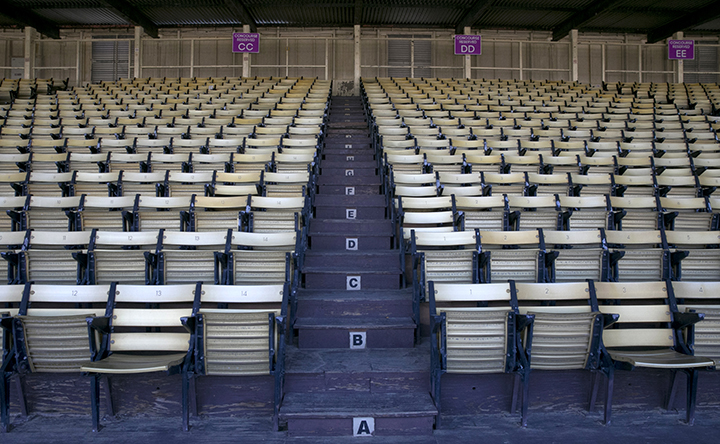
Roughly half of the grandstand at Pimlico Race Course has been deemed structurally unsound by an engineer hired by the track’s owner, necessitating the closure of the area just one month before the Preakness Stakes, the track’s signature race, is scheduled to be run.
The closure will affect 6,670 seats in the north section of the grandstand, or nearly half of the 14,000 seats available in the structure. Pimlico annually erects temporary seating for the Preakness and the card immediately preceding the race, as well as allowing general admission, bringing the overall capacity of the frontside structure to 38,000, according to the track’s website.
“As the safety and security of all guests and employees at Pimlico is paramount, the Maryland Jockey Club made the difficult decision to close that section of the grandstand for this year’s Preakness Stakes,” the track’s owner, The Stronach Group, said in a prepared statement.
The determination that the section of the grandstand was not structurally sound was made by an engineering firm hired by The Stronach Group, which earlier this year unsuccessfully lobbied for a bill that would have allowed the state to issue bonds backed by casino subsidies to fund $120 million in improvements to the company’s other Maryland track, Laurel Park, and a training center in the state. The Stronach Group has said that it no longer considers Pimlico to be a viable site to host the Preakness, angering Baltimore lawmakers and state legislators with ties to the area.
Built in 1870, Pimlico’s grandstand has fallen into disrepair over the past 30 years, and the facility has been beset by structural problems over that timeframe. The closure of the grandstand section will almost certainly focus public attention on the track’s deteriorating condition for the Preakness Stakes, the second leg of the Triple Crown, at a time when The Stronach Group has also been battling criticism about a spate of deaths this winter at its Santa Anita Park in Southern California.
Officials for The Stronach Group did not immediately respond to messages on Monday morning.
The statement released by the company cited a recent study conducted by the Maryland Stadium Authority last year that had concluded that Pimlico had “reached the end of its useful life.” That study, which was conducted in consultation with The Stronach Group, had estimated that it would cost $424 million to rebuild Pimlico from the ground up, with a mix of other amenities including residential and retail developments. The study had also estimated that Pimlico would need $29 million for improvements to the grandstand, absent a total tear-down.
Under state law, The Stronach Group can use subsidies from Maryland’s casinos for capital improvements as long as it matches the funds it receives. Over the past 10 years, the company has focused nearly all of those capital-improvement funds at Laurel.