

Official says 2020 Preakness will stay at Pimlico despite partial grandstand closure
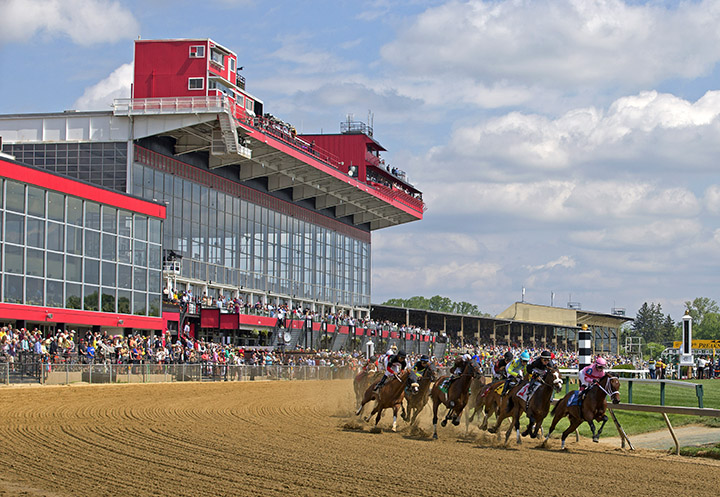
An official for The Stronach Group said on Monday afternoon that the company still plans to hold the Preakness Stakes at Pimlico Race Course in Baltimore next year despite the closure of the north end of the track’s grandstand due to “the deterioration and degradation of the building.”
In response to written questions, Bill Hecht, the chief real estate officer of The Stronach Group, said that the closed section of the grandstand – which holds approximately half of the permanent seating in the structure – would need to be “replaced, not repaired” and that company made the decision to close the section late last week after receiving a report in late March from an engineering company it hired to assess the structural integrity of the property.
“To be clear, the structure is over 100 years old and the building has always been open to the weather, given it was never enclosed nor air conditioned,” Hecht wrote. "It is also important to note that from the findings of the engineer’s report, we are making repairs to other areas so they are usable for the Pimlico meet.”
The Stronach Group announced that it was closing the section on Saturday in a public statement, saying the engineer’s report determined it was “no longer suitable to sustain that level of load-bearing weight.” That statement said the closed section contains 6,670 seats, from a total of 14,000 seats in the entire building.
The statement said that ticket holders for the closed section would be able to “trade in their tickets at face value for similar seating.”
The Preakness Stakes is the second leg of the Triple Crown and anchors a blockbuster card of racing that annually attracts approximately 100,000 people to the track. Pimlico erects temporary seating for the event, and a maximum of 82,000 can be admitted to the track’s infield, where concerts are staged on Preakness Day.
Although Hecht said that the company expects to hold the Preakness at Pimlico next year, officials for the company have said they eventually plan to move the race to a sister track, Laurel Park, located halfway between Baltimore and Washington D.C., in the future. That plan has drawn blowback from Baltimore officials and legislators with ties to the area.
Hecht said that The Stronach Group hired the engineering company, Faisant Associates, following the release of a report last year conducted by the Maryland Stadium Authority that said that Pimlico had “reached the end of its useful life.” The report, which was conducted in consultation with The Stronach Group, said that a complete rebuild of the track, along with the development of retail and residential locations on the property, would cost $424 million.
Officials for TSG have said they have no intention of devoting significant resources to a reconstruction of the track, and for the past decade the company has been using capital improvement subsidies from state casinos almost exclusively for renovations at Laurel.
Faisant Associates conducted its assessment after the start of the new year, Hecht said.