

NYRA hearing officer recommends two-year ban for Baffert
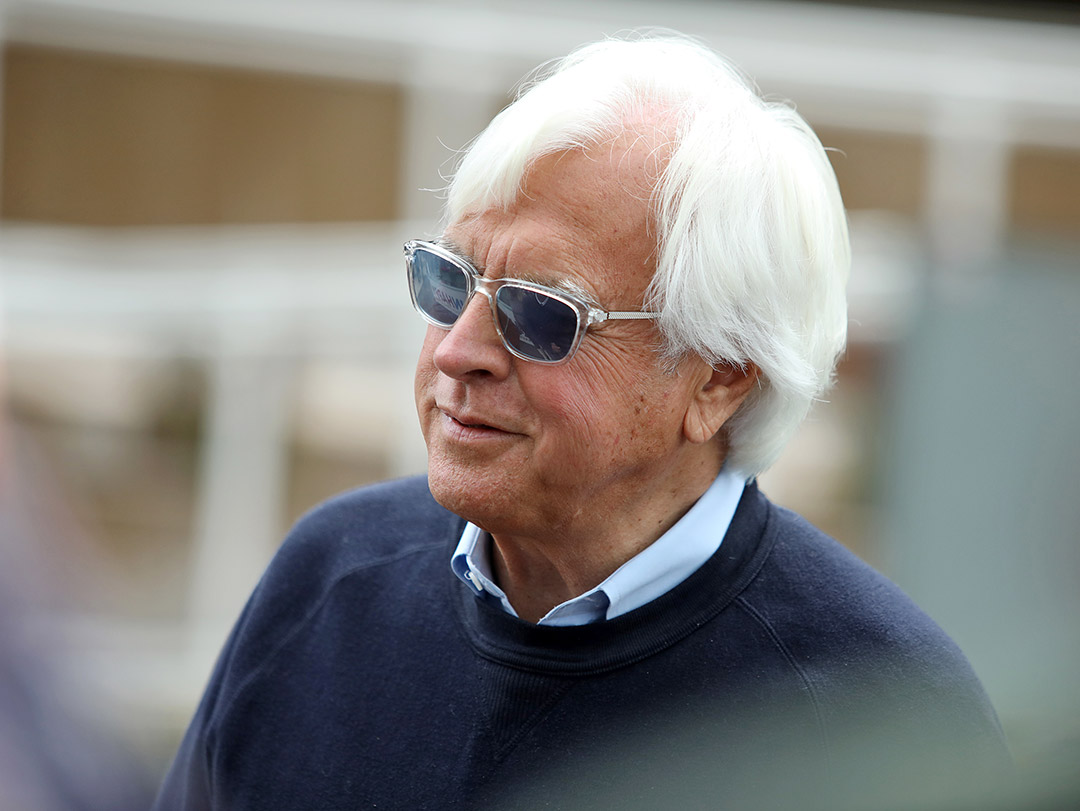
A hearing officer appointed by the New York Racing Association recommended in a report released Wednesday that the association should ban trainer Bob Baffert for two years due to a string of medication violations over the past several years.
The hearing officer, O. Peter Sherwood, a retired New York Supreme Court justice, recommended the two-year ban after accepting arguments from NYRA’s attorneys that the “evidence establishes that Baffert has engaged in conduct that is detrimental to the best interests of Thoroughbred racing in that he has harmed the reputation and integrity of the sport, as well as the public’s perception of the sport’s legitimacy.”
Sherwood released the report three months after presiding over a five-day hearing called by NYRA to consider the association’s intention to ban Baffert. While the precipitating factor for the ban was a positive in the Baffert-trained Medina Spirit in last year’s Kentucky Derby, NYRA’s attorneys had argued that Baffert had a history of medication violations over the past three years that necessitated a long ban from the association’s properties.
Under an agreement reached between attorneys for both sides, Baffert and NYRA will have 14 days to file “exceptions” to the hearing officer’s report. After that deadline, a three-person panel appointed by NYRA has 10 days to “adopt, modify, or reject any or all” of the recommendations of the report.
According to NYRA, the three people on the panel are Will Alempijevic, the executive director of the New York Thoroughbred Horsemen’s Association; Humberto Chavez, the head of the New York Race Track Chaplaincy group; and John J. Carusone Jr., a Saratoga Springs attorney.
Clark Brewster, one of Baffert’s attorneys, said on Wednesday night in a prepared statement that Baffert’s legal team will “contest this recommendation until we ultimately find a neutral, detached decision-maker that doesn’t rubber-stamp the NYRA lawyers’ demands.”
The NYRA ban would be imposed by the association, and it cannot be appealed. However, Baffert could file a lawsuit claiming that NYRA denied him due-process rights during the conduct of the hearing or claim that the punishment was “arbitrary and capricious,” avenues that several license holders have taken in the past to contest bans by private companies.
Baffert is currently serving a 90-day suspension handed down by Kentucky’s stewards because of the Medina Spirit positive and has dispersed his horses to two other trainers. The suspension runs through July 2. The NYRA report recommends that the two-year ban go into effect after the suspension expires.
Although Baffert is based in Southern California and runs the vast majority of his horses at tracks in the state, he frequently ships his top-class horses to compete in major stakes held at tracks across the U.S., including two of NYRA’s properties, Belmont Park and Saratoga Race Course. Belmont Park is the host of the third leg of the Triple Crown, the Belmont Stakes.
Baffert has won the Belmont Stakes three times, including twice with horses that won the Triple Crown, in 2015 and 2018.
Sherwood’s report makes clear that he accepted wholesale the arguments by NYRA’s attorneys, including their contention that Baffert’s public statements after the Derby positive last year constituted “outlandish behavior” and that his string of medication violations represented “reckless behavior.”
Although Baffert initially disputed the positive finding of the regulated corticosteroid betamethasone in Medina Spirit, he later issued a statement contending that the horse had been administered an ointment to treat a skin condition that contained the drug. He also apologized for his public statements.
According to Sherwood’s report, “NYRA also proved that each time Baffert was charged with a violation he provided an implausible excuse, and blamed others for conduct that he, as the trainer, was responsible for as a matter of law.”
During the January hearing, NYRA’s attorneys cited a number of violations from Baffert’s past. None of those violations resulted in the trainer being given any days of suspension. In his report, Sherwood said that the violations proved that “Baffert has engaged in a pattern and practice of unlawful conduct that has no parallel in the modern history of Thoroughbred racing.”
Baffert’s attorneys continually argued during the hearing that regulatory agencies had already considered those cases and meted out penalties after they were adjudicated, and that NYRA’s attempt to impose a ban based on those cases was an overreach. The attorneys also argued that NYRA allows trainers with far more medication positives than Baffert to race at its tracks.
In his statement, Baffert’s attorney Brewster pointed out that the recommendation in the report was based on “no charges against Bob alleged in New York.”
“NYRA made no claims that Bob used a banned or prohibited substance,” Brewster said. “All witnesses testified that Bob was always respectful, polite, professional, responsive, and compliant."
Shortly after the Derby last year, Churchill Downs banned Baffert through the 2023 Derby, a decision that Baffert’s attorneys challenged in federal court earlier this year. However, after Baffert began his suspension, his attorneys asked a judge to withdraw the lawsuit.
Sherwood’s report notes the ban handed down by Churchill and wrote that “Baffert has not established grounds for any shorter period of exclusion from NYRA racetracks.”
The January hearing was scheduled after a court ruled that an indefinite ban issued by NYRA shortly after the Derby last year violated Baffert’s due-process rights. NYRA then adopted internal protocols for conducting hearings against racing licensees and served Baffert with a “statement of charges” outlining the association’s rationale for a ban.
For related coverage:
NYRA hearing on Baffert concludes first day
NYRA, Baffert's attorneys clash of significance of medication violations
NYRA witnesses claim Baffert adversely affected business
Baffert takes stand at NYRA hearing
Closing statements made at Baffert hearing