

No serious incidents during first week with new whip rule
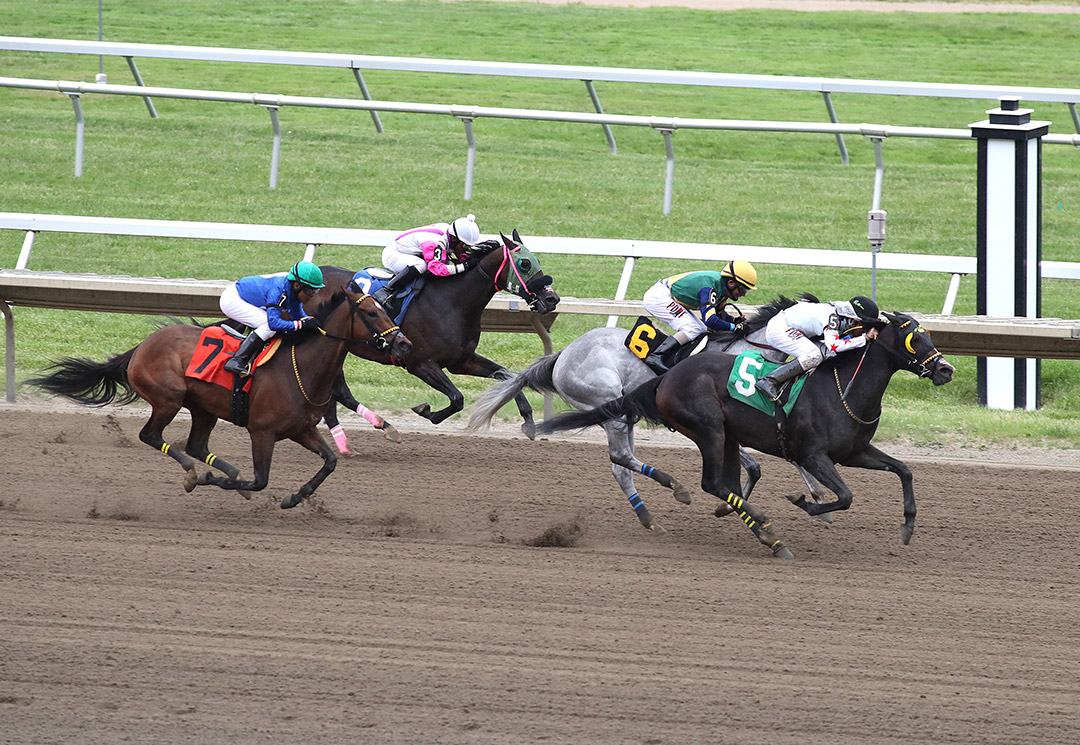
The four-day opening race week of Monmouth Park’s 2021 season whipped past quicker than might have been expected.
There were no strikes or boycotts by jockeys and no in-running incidents during the 38-race week, the first race meeting in North America in which jockeys are not permitted to use whips for anything other than safety.
The New Jersey Racing Commission enacted the whip rule, easily the most stringent in North America, during 2020 and it went into force May 29 over vocal protests from The Jockeys’ Guild and some very prominent riders. Joe Bravo, the best known Monmouth-based jockey, declined to ride the meet, as did another established Monmouth rider, Antonio Gallardo, and there were concerns before the first day’s entries were drawn that Monmouth might lack a large enough jockey colony to support racing. Fourteen different riders were named on opening-day mounts, a number that increased day by day through opening week, though several members of the colony are little known and had ridden few races during 2021.
Outspoken opponents of the rule continue to assert that it compromises jockeys’ safety, but interpretation of how a rider wields a whip is left to Monmouth stewards, and at least one Monmouth jockey, Jose Ferrer, said stewards and track officials (who had a meeting with jockeys and guild representatives two days before the meet began) aren’t restricting whip use in an unsafe manner.
:: Bet the Belmont Stakes on DRF Bets! Join today with code DOUBLE and get a $250 Bonus.
“If you have to tap the horse to make sure the horse goes through the hole, things like that, they say that’s okay,” Ferrer said in a phone interview on Sunday. “They don’t want anyone to get hurt out there. They’re working to make things safe – safety first. This is all new for them. With something new, they have to make some adjustments.”
Ferrer wound up the week with five winners from 23 mounts to top the jockey standings after four days. At 57, with 37 years of professional riding behind him, Ferrer has seniority on nearly every active jockey in America. He’s a veteran voice in a Monmouth jockeys’ room, counseling his younger colleagues as they sit at the center of an unexpected experiment in American racing. “It’s doable, like I explained to these kids. I don’t think it’s that dangerous.”
Many Monmouth jockeys on opening day decided they’d forego carrying a whip (the track is communicating that information through the announcer during post parades, a Monmouth official said), Ferrer among them, but after one ride, Ferrer went back to carrying his crop.
“I was feeling a little bit lost, like you’re missing something after so many years with the crop in your hand, so I needed something in my hand,” Ferrer said, “You put it in your hand, and you focus on not hitting them . . . you have to train your brain.”
Races Saturday, Sunday, and Monday were contested on a wet main track, with turf racing abandoned. Friday, on a fast track, front-runners over the historically speed-friendly Monmouth dirt surface were at the mercy of stalkers and closers.
“Speed horses, they kind of got lost down the lane,” Ferrer said.
In some races, horses racing disinterestedly never came close to reaching contention, though they might have done so with encouragement from the crop, which is forbidden. Yet favorites won 18 of the 38 races and simulcast handle, while down compared to similar days during late-spring 2019, didn’t crater.
“It wasn’t as big a change as I was maybe anticipating,” trainer Todd Pletcher said Monday at his Belmont barn. Pletcher has a string at Monmouth and started one horse, an unplaced favorite, during opening week. “I watched all the replays opening day. There was never a photo finish that day, which was interesting. Sunday, there was a bit of race riding in one race, the race we were in. The question we don’t know is, ‘Are there horses behind there that aren’t responding that might have if encouraged?’
“I was watching one of the races with my son, who doesn’t really follow the sport much, and I said, ‘What do you notice about this race?’ And after the race he said, ‘I don’t know. It looked like any other race to me.’ ”
Ferrer is working to adapt to the strange new feeling racing at Monmouth. He’s accepted how this meet will function for jockeys, but that doesn’t mean he supports the whip ban.
“The whip, it’s not about abusing the horses. It’s more about communication with the crop than anything. The whip is just a tool we use,” Ferrer said. “Right now, our hands are tied behind our back. We’ll go by this rule and hopefully everything goes well, but people will see it’s not going to work a lot.”
Juvenile race split
Friday’s six-race twilight card (first post 5 p.m. Eastern) is heavy on babies. A 4 1/2-furlong sprint for 2-year-olds attracted so many entries that it was split into two divisions, races 1 and 3. Pletcher has two horses – Where’s Bridgit and Always a Party – in the opener, and Miss Interpret in race 3.
Miss Interpret, by Street Sense, and Where’s Bridgit, by Bernardini, “probably are a little better suited to longer [distances] but are prepared and ready to go.” Always a Party, by Munnings, “has been sharp from the gate at Saratoga, which you need to be in races like this,” Pletcher said.
100 Beyer for Wind of Change
Wind of Change’s front-running 6 1/4-length wet-track victory Saturday in the Mr. Prospector Stakes produced a career-best 100 Beyer Speed Figure for the Brazilian import. Trainer Saffie Joseph Jr. said the horse remains with his string at Monmouth pending a decision regarding his next start, which could come in the July 4 John Nerud over seven furlongs at Belmont or the July 3 Smile Sprint Invitational at Gulfstream.