
Monmouth: Fewer stakes, smaller purses for 2016 season
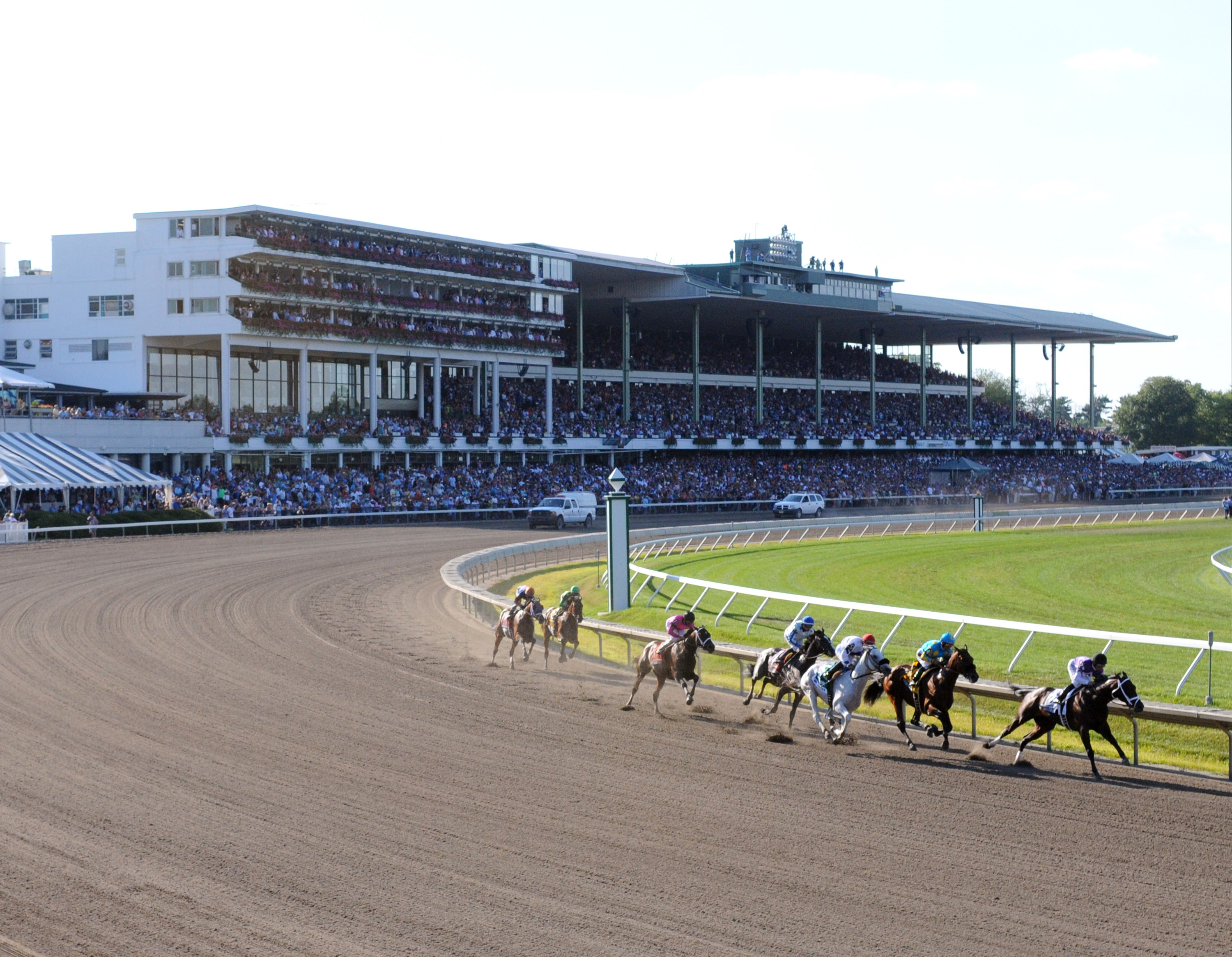
A year after Monmouth Park pulled out all the stops to lure American Pharoah to the Haskell Invitational, boosting the purse to $1.75 million, the Jersey Shore track will be tightening its belt for its 71st season, which begins Saturday.
American Pharoah, the first Triple Crown winner to ever race at Monmouth, fueled attendance and handle records when a reported crowd of 60,893 turned out and all-sources handle topped $20 million. This year, due to a number of factors, Monmouth has trimmed $1.1 million from its stakes schedule and has reduced purses for lower-level overnight races.
The stakes cuts include dropping the Grade 2 Monmouth Stakes and reducing the purse of the Grade 1 United Nations from $500,000 to $300,000. Four Grade 3 stakes have had their purses reduced from $150,000 to $100,000, and seven other stakes were dropped.
The purses for allowance, optional-claiming, and maiden races remain the same as a year ago.
“People out of town expect us to make those races, and we do our best to make them go,” said Bob Kulina, the president of Darby Development, which operates the track on behalf of the New Jersey Thoroughbred Horsemen’s Association. “The claimers and other lower races were reduced by about 8 percent. Overall, overnight purses are down about 5 percent.”
According to Kulina, the purse reductions were needed to offset nearly $5 million in capital improvements made since last season. Those projects include a new grandstand roof, repairing the track’s elevators and escalators, upgrading to high-definition video, redoing the infield tote and matrix boards, and allocating funds to finish building the Blu Grotto restaurant near Monmouth’s mini-golf course. Monmouth also must make a loan payment of more than $1 million to the state this year.
On Tuesday, Monmouth, in partnership with Betfair, became the first track in the United States to launch exchange wagering. Betfair, which owns the account-wagering service TVG and has an online casino in New Jersey, is a British company that has offered exchange wagering overseas for 15 years.
In New Jersey, exchange wagering will let customers set fixed-rate odds and bet against each other before and during horse races. Betfair is seeking permission to use races from a number of tracks in the exchange. For now, the options include Monmouth, Evangeline Downs, Louisiana Downs, Mountaineer, and Will Rogers Downs, among others. Only New Jersey residents who are physically in the state are allowed to wager on the exchange.
Monmouth began sending its simulcast signal overseas for exchange-wagering purposes in 2010 and has been working to have it legalized in New Jersey since 2011.
“Exchange wagering will appeal to day traders, arbitrage traders, and a younger demographic,” said Dennis Drazin, the head of Darby Development. “We are hopeful his will bring new people to the track.”
While Monmouth still hopes to one day offer sports betting, that legislation remains bogged down in the Third Court of Appeals.
The Haskell Invitational will be sponsored this year by Betfair.com. In the past three years, it was sponsored by the British bookmaking firm William Hill, which had hoped to partner with Monmouth on sports betting. The Grade 1 Haskell will be run July 31 and will be televised on NBC. The race is part of the Breeders’ Cup Challenge Series and offers a fees-paid berth in the BC Classic to the winner.
On Nov. 8, New Jersey residents will vote on a referendum to allow two casinos to be built in north Jersey, most probably, according to Drazin, at the Meadowlands sports complex and in Jersey City. Monmouth has long wanted one of the casino licenses but is out of the running. The referendum assures horse-racing interests at least 2 percent of the new gaming revenue, and the hope is that the final figure will be significantly higher.
“Disappointingly, we will not have a casino,” Drazin said. “I don’t really agree, but it was decided that we are too close to Atlantic City. Unfortunately, 2 percent is not enough to really make a difference. I’m not being unappreciative because the money will help us, it just isn’t enough purse money to bring us up to the levels of surrounding states.”