

KHRC calls final witnesses in Baffert appeal hearing
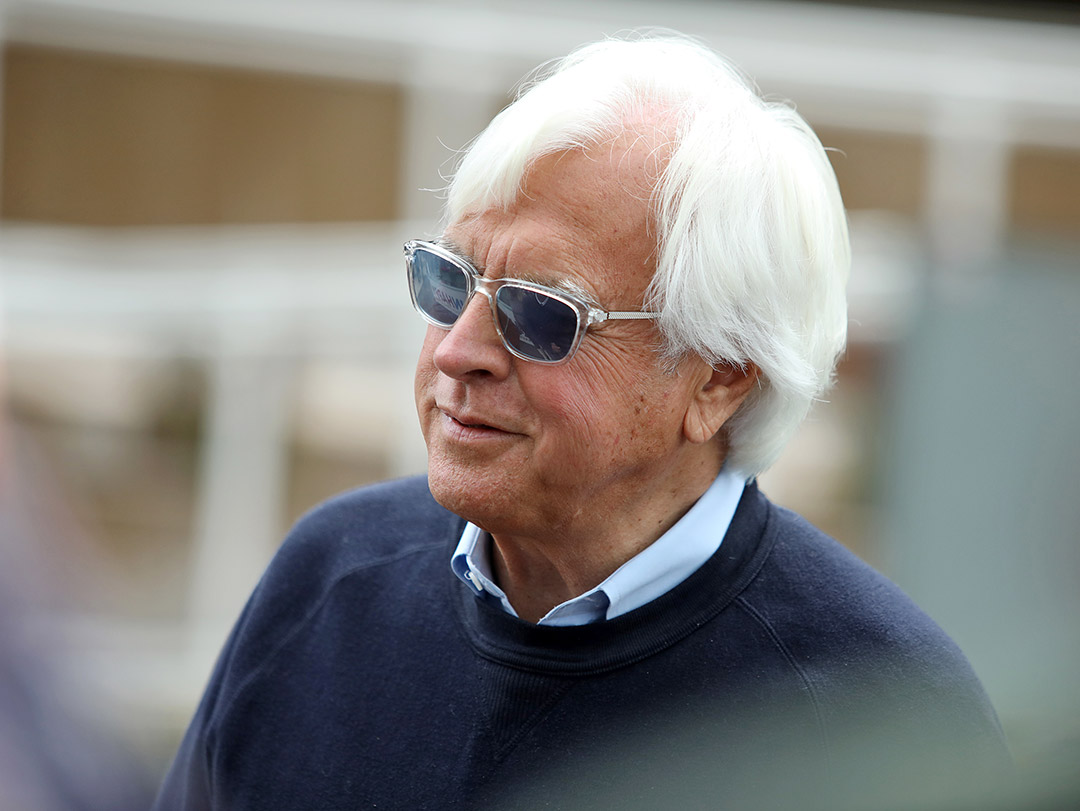
The Kentucky Horse Racing Commission called its final witnesses on Thursday during the fourth day of a hearing to consider an appeal by the trainer Bob Baffert of a 90-day suspension he has already served, according to people involved in the hearing.
Attorneys for the KHRC called three witnesses on Thursday: Dr. Scott Stanley, the director of an equine testing laboratory at the University of Kentucky; Dr. Ben Moeller, an analytical chemist at the drug-testing laboratory at UC-Davis; and Dr. Mary Scollay, an expert in equine pharmacology who is the executive director of the Racing Medication and Testing Consortium. After the three testified, the attorneys indicated that they had no more witnesses to call, according to an attorney involved in the case.
The hearing, which is being held in an office building in Frankfort, Ky., will resume on Monday and Tuesday with attorneys for Baffert beginning their case. The attorneys are expected to call at least two witnesses on Monday, including Dr. George Maylin, the director of a drug-testing laboratory in New York, and Dr. Steven Barker, the former director of a drug-testing lab in Louisiana, according to one of the attorneys, Craig Robertson.
:: Bet the races with a $200 First Deposit Match and FREE Formulator PPs! Join DRF Bets.
Baffert is appealing the 90-day suspension handed down by Kentucky stewards in February, eight months after Baffert’s Medina Spirit tested positive for betamethasone, a regulated corticosteroid, in last year’s Kentucky Derby. Medina Spirit, who died of a suspected heart attack in December after finishing a workout at Santa Anita, was disqualified.
The appeal is being heard by Patrick Clay, a Frankfort attorney. Upon conclusion of the hearing, Clay will have several months to prepare a report recommending a course of action for the full KHRC. The KHRC will have the power to accept, reject, or modify his recommendation.
Moeller, who testified on Thursday, is the director of the lab that confirmed betamethasone in the Derby sample. Petra Hartmann, the director of the lab that tested the first sample, testified on Wednesday, though behind closed doors.
Baffert’s attorneys have argued that Kentucky’s rules about betamethasone apply only to injectable forms of the drug. Baffert has testified at several hearings, including the one being conducted this week in Kentucky, that the betamethasone came from a skin ointment containing the medication, and that Medina Spirit was never injected with the drug, which is a powerful anti-inflammatory. Trainers are cautioned not to administer the injectable form of the drug within at least two weeks of a race.
Dr. Maylin, the New York lab director who will likely testify on Monday, was hired last year by Baffert’s attorneys to test a split of Medina Spirit’s post-Derby sample to find ingredients that are also in the ointment. Maylin has said in depositions that he found all three ingredients of the ointment, and he is expected to testify about those results.
Attorneys representing the KHRC have said that Kentucky’s rules do not contain exceptions for the presence of betamethasone in a sample on raceday, and that the route of administration is immaterial to a finding of a drug.
Baffert began serving the penalty in early April after several unsuccessful efforts to have the suspension stayed while he appealed. The hearing is also considering an appeal by Medina Spirit’s owner, Amr Zedan, of the stewards’ decision to disqualify the horse.
Baffert remains banned by Churchill Downs through next year’s Kentucky Derby, and the appeal will have no bearing on that decision unless Baffert’s attorneys attempt to use an unlikely exoneration by the KHRC as the basis for a lawsuit challenging the Churchill ban. Baffert filed a suit challenging the Churchill ban earlier this year, but the suit was later rescinded by Baffert’s lawyers.
In addition, Baffert is banned through late January at all the tracks operated by the New York Racing Association, a ban that is also unrelated to the KHRC appeal.