

Kentucky Derby postponed to Sept. 5 due to coronavirus
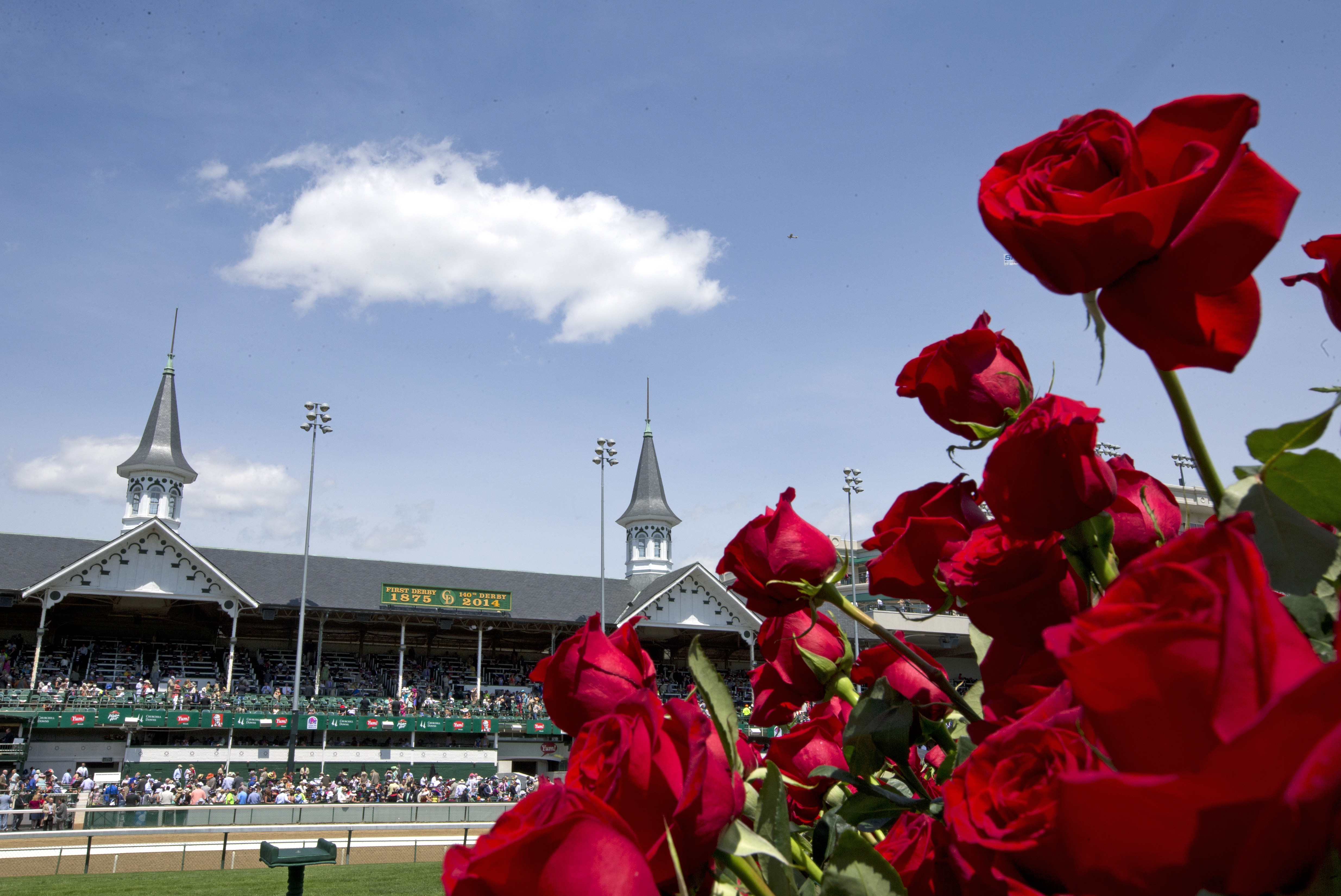
LEXINGTON, Ky. – The Kentucky Derby, the race whose name is synonymous with the first Saturday in May, has been re-scheduled for the first Saturday of September on Labor Day weekend, the race’s host, Churchill Downs, announced on Tuesday morning.
The Sept. 5 rescheduling of the Kentucky Derby, four months after the date on which it has been run for the past 74 years, underlines the dramatic disruptions to the business and sporting worlds caused by the spread of the coronavirus. Provided the virus is contained by the summer, the Sept. 5 date will allow prospective Derby spectators ample time to make travel plans and obtain tickets, for an event that is prominent on the “bucket lists” of many Americans and critical to the financial performance of the race’s parent company, generating upward of $100 million in net revenue annually to the bottom line.
“The most recent developments have led us to make some very difficult, but we believe, necessary decisions, and our hearts are with those who have been or continue to be affected by his pandemic,” said Bill Carstanjen, the chief executive of Churchill’s parent company, on a conference call held early on Tuesday morning. Carstanjen said the coronavirus impact has presented the “most unexpected and challenging circumstances of my career.”
Churchill also said in a release that the Kentucky Oaks has been rescheduled for Sept. 4. The race, for 3-year-old fillies, is traditionally held the day before the Derby.
The Derby is, of course, the first leg of the Triple Crown, the most high-profile series of races in American Thoroughbred racing, and rescheduling the Derby to Sept. 5 will have an enormous impact on the remainder of the U.S. racing calendar and the economic performance of competing tracks. That impact is so far unclear, but if the other hosts of the Triple Crown races decide to stick to the traditional spacing of the events, the Preakness Stakes at Pimlico Race Course in Baltimore would be held on Sept. 19 and the Belmont Stakes in New York on Oct. 10. That is no certainty, however.
A slew of prep races for the Derby have already been run this year, but some prep races have been placed in jeopardy due to coronavirus, and some have already been canceled. The Blue Grass Stakes will not be run this spring, for example, due to the cancellation of the spring meet at Keeneland Racecourse in Lexington. Despite the outbreak, many tracks with critical prep races for the Derby, such as Aqueduct, Gulfstream, Oaklawn, and Santa Anita, have continued to race, though spectators have been barred indefinitely.
The 20-horse Derby field is set by points earned by individual horses in the prep races leading up to the Derby. On Tuesday, Churchill officials said that points earned in prep races will still count toward Derby eligibility this year, but that the track would also identify other stakes later in the year for additional points. The company has not yet identified those races but will do so when the racing calendar is cleared up.
“We will take existing stakes held around the country and incorporate them into the series,” Carstanjen said.
The rescheduling will also impact other stakes traditionally held in the fall. To take just one example, the Travers Stakes, billed as the Mid-Summer Derby, is scheduled for Aug. 29 at Saratoga Race Course, one week prior to the new Derby date, and it will now almost certainly be rescheduled as a result of the decision by Churchill. Saratoga’s operator, the New York Racing Association, also operates Belmont, and the company’s management was said on Monday to have received little communication from Churchill about its plans.
On the conference call, Carstanjen said that Churchill officials gave the operators of Belmont and Preakness a “heads-up” about the rescheduled date just prior to the official announcement. He said he hoped that the tracks would commit to the traditional spacing and work out a deal with NBC, the exclusive broadcast partner of the Triple Crown.
“It’s all possible, they just have to work it out together, and I hope they do,” Carstanjen said.
But nothing is normal this year due to the coronavirus impact, and major racing events throughout the year may have been rescheduled even without the Derby’s new date. Conceivably, the Triple Crown series this year could act as a lead-in to the Breeders’ Cup event, which is scheduled for Nov. 6-7 at Keeneland, a prospect that could keep racing in the national spotlight for three months.
Although The Stronach Group, the owner of Pimlico, said it had no comment on Tuesday morning about its plans for the Preakness, the communications director for Maryland Gov. Larry Hogan posted a message on Twitter that said the governor’s office is “in active discussions to postpone the Preakness Stakes until September.”
David O’Rourke, the chief executive officer of the New York Racing Association, the operator of Belmont, said in a statement released after the Churchill announcement that the organization “is working closely with all appropriate parties, including media rights holder NBC Sports, to make a determination about the timing of the 2020 Belmont Stakes.”
Churchill has not been awarded dates to run in early September this year, but its economic and political heft will likely lead to swift approval from state regulators to obtain the dates it needs for the race and any events leading up to the Derby. The track is currently scheduled to start its brief September meet on Sept. 16. The dates surrounding Labor Day dates have already been awarded to Ellis Park and Kentucky Downs.
Carstanjen said that the company expects the dates to be approved at a Kentucky Horse Racing Commission meeting scheduled for this Thursday.
The KHRC “has been very cooperative during this whole process,” Carstanjen said.
For all of its cultural and sporting impact, the Derby is also an enormous money-maker for Churchill Downs, a company that has spent more than $100 million over the last 20 years to remake its grandstand into a smorgasbord of options for high-paying customers. Canceling the Derby outright would have had a significant impact on the company’s financial performance, at a time when its stock price has plummeted from a high of $162 in mid-February to only $76 at the close of markets yesterday. (All gambling companies have seen their stocks battered in the midst of the crisis.)
Last year, Churchill Downs the racetrack had approximately $155 million in net revenue during the second quarter, according to its parent company’s financial statements, with $41.3 million attributed to money from pari-mutuel betting and $113.4 million from “racing event-related services,” which includes ticketing and concession revenue (the company does not specifically break out Derby-related revenue). Its adjusted earnings before interest, taxes, depreciation and amortization in the second quarter from Churchill Downs was $121.9 million, a figure which includes EBITDA from its casino in Louisville.
The Derby is also an economic engine for Louisville and the surrounding community, with restaurants and hotels benefitting significantly from the surge in tourists that descend on the city for the Derby and its related festivities. Over the past decade, Churchill has heavily promoted its Derby week festivities, and the crowd for the Kentucky Oaks, held the day prior to the Derby, regularly exceed 100,000.
Handle on the Derby has set records four years in a row, with wagering last year reaching nearly $160 million, by far the most amount bet on a single horse race in the U.S. To date, the Kentucky Derby card is the only card in American racing that has broken the $200 million mark. Total wagering on the 13-race card last year was a record $223.7 million, according to charts of the races.
NBC Sports has an exclusive contract to broadcast the Derby, and the race is typically one of the highest-rated sports broadcasts of the year. Although NBC also has contracts to televised college football at that time of the year, the network has been able to work around conflicts in the past by negotiating broadcast windows that do not conflict with its Derby coverage.
The Derby has been held on the first Saturday of May since 1946, but one year earlier, the race had been held on June 9. Racing was banned at the start of 1945 because of World War II, but the ban was lifted after Nazi Germany surrendered on May 8. Prior to the ban, the race floated among mid-May dates until the 1930s. The race was first run in 1875, and is currently billed as the longest-running sporting event in the U.S.
Canstanjen closed the conference call on an optimistic note.