

Iowa Stallions: Stroll a bright spot in tough times
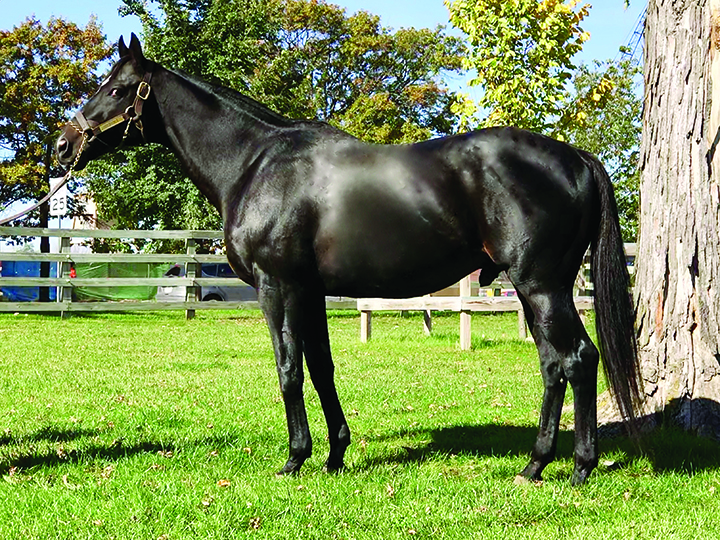
As America’s Thoroughbred industry goes, so go our regional breeding centers. Iowa’s Thoroughbred business certainly reflects the larger whole, only with more dire numbers. It is currently in a state of painful contraction – and has been for years. While neighboring Illinois’s parallel struggle has been attributed, in large part, to a lack of racetrack casino revenues, Iowa is here to tell you that such gaming centers, while helpful, are no cure-all.
Electronic gaming machines were legalized at Iowa tracks in 1994, with table games added a decade later. While annual purses distributed have since gone up in the Hawkeye State at its Thoroughbred facility, Prairie Meadows, where a casino is open 24/7, year-round, sadly, the breeding industry has not followed that positive trend.
In 1998, 74 stallions covered 903 mares. Twenty years later, that number had declined to 16 stallions and 117 mares, representing a 78 percent drop in stallions in service and an astonishing 87 percent decline in mares. While the national foal crop has shrunk by 37 percent between 1998 and 2017 (the last year with full data available), in Iowa that number is 66 percent.
Still, remaining breeders here are a hardy species, and they keep on keeping on.
The Hawkeye State’s leading 2019 sire in an earnings landslide was Claiborne-bred Grade 1 winner Stroll, a relative newcomer acquired by a syndicate in 2016 and relocated to Iowa State University’s Department of Animal Science, near Ames. Based on earnings of his Kentucky-generated progeny, the now-20-year-old son of Pulpit led the general sire lists of the entire Midwest region (minus the Blue Grass state) in both 2018 and ’19. He was welcomed here with open arms, covering a state-high 39 mares in his debut Iowa season – the results of which will race this year.
Stroll’s 43 winners in 2019 more than doubled the total of runner-up Native Ruler (19), as his nearly $2 million in progeny earnings was almost triple that of the runner-up. During his own racing days, Stroll had excelled on grass. His offspring show a similar affinity with 18 turf winners in 2019, the most notable being Canadian Grade 1 winner Wet Your Whistle, a 1:07.88 six-furlong speedball at Woodbine. Stroll also ranked first in Iowa last year by juvenile earnings and winners.
Stroll, who has 20 stakes winners and progeny earnings of almost $15 million, got off to a fast start in 2020, with two winners in the first three days of the year.
Native Ruler, second-ranked by overall earnings and number of winners, was the kind of racehorse America could use these days. He was tough, fast, classy, and perhaps most important at this point in racing’s history, he was sound enough to campaign through six full seasons, hitting the board in 28 of 41 starts, mostly stakes, and earning $712,296.
When time came to retire the 10-time stakes winner, owner and Iowa-native Maggi Moss opted to keep him at home. She sent the son of Elusive Quality to Abraham’s Equine Clinic near Cedar Rapids, where he remains today, standing for a $2,000 fee for 2020.
Since his first runners hit the track in 2015, Native Ruler has been a solid and very reliable source of hard-knocking runners, enough so that he has twice been named Stallion of the Year (2017 and 2018) by the Iowa Thoroughbred Owners and Breeders’ Association. His best runner thus far has been three-time Prairie Meadows stakes winner Scrutinizer, whose career earnings have exceeded $350,000 through 2019.
Jafmil, who stood at Robson Thoroughbreds through 2019, did not cover any mares last year, but the unraced 11-year-old son of Distorted Humor did have a stat worth mentioning in his fifth-place finish on the state sire list. Lightly used at stud (averaging just five foals per racing age crop), Jafmil sent nine runners to the races last year – and all nine won. His lifetime record to date isn’t too shabby either, with 18 winners from 22 starters.
This article is part of the Midwest regional coverage in our annual Kentucky Stallions special edition. To download the complete edition, click here.