

Horsemen concerned over plan to close Aqueduct for stabling and training
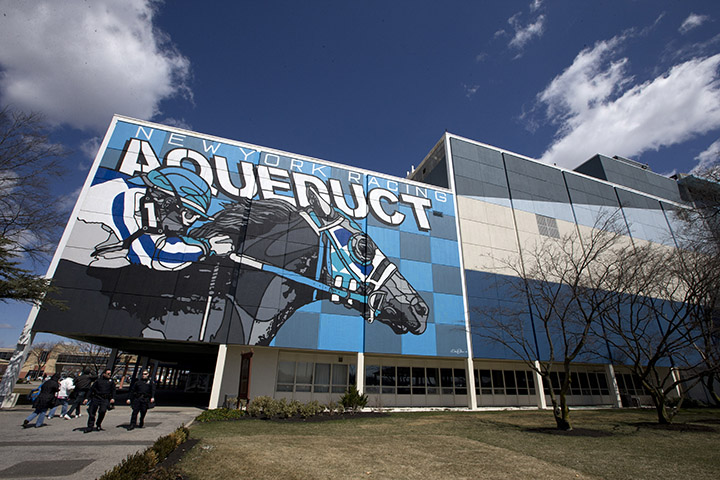
OZONE PARK, N.Y. - The New York Racing Association will shut down stabling and training operations at Aqueduct beginning Jan. 1, a decision that has concerned horsemen.
According to NYRA president and CEO Dave O’Rourke, the decision to close Aqueduct for stabling and training has to due with a lack of horses on the grounds and a desire to consolidate stabling and training at Belmont Park. Horsemen believe NYRA is doing this simply as a way to save money and are concerned that not training over the track at which a race meet is being conducted could cause safety issues. Aqueduct’s winter meet opened Thursday and runs through March 29. There is also a 13-day spring meet in April.
In a petition signed by 57 horsemen and sent to Dr. Scott Palmer, the equine medical director for the New York State Gaming Commission, horsemen write “we are adamant about the possibility of breakdowns and injuries to our horses if we race over a track that has no training especially in the hard winter months of January, February and March.”
The petition goes on to say “the safety of our horses comes first and foremost and the economics play no part when it comes to the safety of our horses, our jockeys and our industry.”
O’Rourke said that NYRA still plans to maintain Aqueduct’s main track overnight and in the morning and in discussions he’s had with Glen Kozak, NYRA’s vice president of facilities and racing surfaces, and Mick Peterson, executive director of the Racing Surfaces and Testing Laboratory, there shouldn’t be an issue with the track for racing.
“The surface will be actually be better,” O’Rourke said.
Peterson, in a press release put out by NYRA, said not having training at Aqueduct would be beneficial to winter racing.
“In particular, if NYRA encounters changing winter weather conditions then decisions related to the maintenance of the track can be made based on what is needed to prepare the track for racing,” Peterson said. “This will allow, for example, a track that is harrowed overnight to avoid freezing to be floated in the morning as it warms up to keep rain out of the cushion.”
O’Rourke acknowledged there would be a financial benefit to NYRA to not have to maintain the Aqueduct barn area.
“There’s savings involved with it, yes,” O’Rourke said Thursday. “But it’s basic business principle utilization. Belmont is built for 2,500 horses. It’s half full in the winter.”
O’Rourke said there are approximately 250 horses currently stabled at Aqueduct. Eighty-five percent of the starters on an Aqueduct card ship over from Belmont, O’Rourke said.
According to Kozak, the Belmont training track is maintained “in a way that is consistent with the surface at Aqueduct.”
In recent years, NYRA has closed the Aqueduct backstretch following the spring meet and kept it closed for four to five months, before re-opening well in advance of the fall meet. O’Rourke said there are no plans to reopen the Aqueduct backstretch “barring an increase in the horse population,” he said.
NYRA also utilizes Saratoga for stabling and training from April through October.
There is some concern among horsemen about having all the horses on the grounds utilize just the Belmont training track especially on busy weekend mornings when the majority of horses put in workouts.
Joe Appelbaum, the president of the New York Thoroughbred Horsemen’s Association, said he is concerned about two things.
“One will be the load on the Belmont training track, although NYRA is planning to move extra outriders there, that is a very good step we can keep a good monitor on things,” he said. “A lot of the guys expressed concern about the Aqueduct surface. Mick Peterson countered those concerns with his own thinking. Since of none of us have any experience with this, the most important thing is vigilance and constant monitoring of the surface.”
