
Harness: U.S. representatives discuss goodwill trip to learn about French Trotting
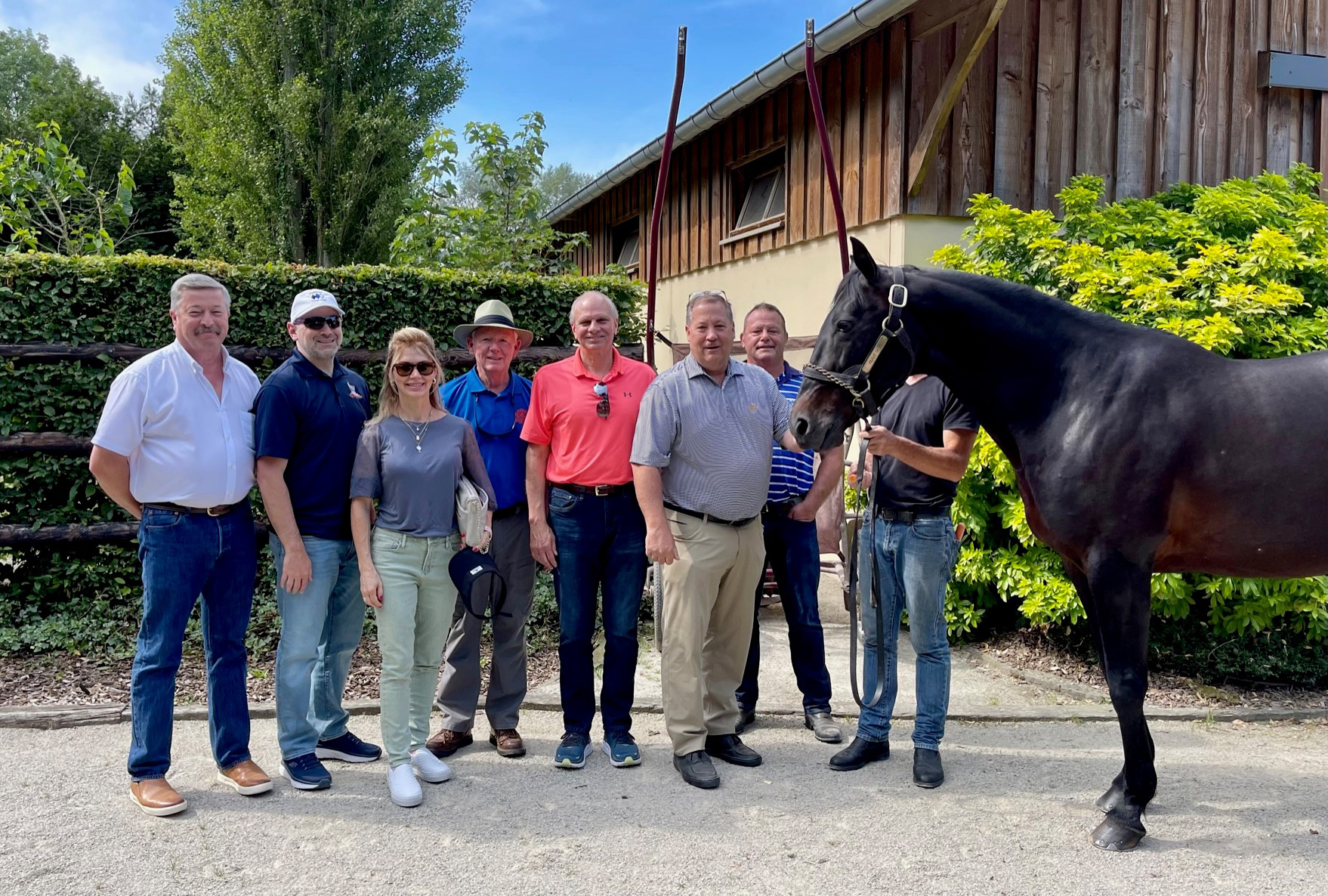
From June 20 to June 27, I was part of a group of United States representatives which toured the breeding and racing scene in France to help build the relationship between the two nations. We started in the Normandy region, led wonderfully by LeTROT's Emmanuelle Morvillers, and made our way south to Paris while meeting with various trainers, breeders, owners, and industry representatives.

It was a wide-ranging group of representatives from various regions, including Hickory Lane Farm's Kevin Greenfield from Ohio, Blue Chip Farms' Tom Grossman from New York, Preferred Equine's David Reid, veterinarian and USTA Director Dr. Andy Roberts from Kentucky, and Hanover Shoe Farms' Jim Simpson from Pennsylvania.
As the trip was winding down, I caught up with each to ask them about the experience as well as how it could impact any future cooperation between the two countries.
Kevin Greenfield (Hickory Lane Farm)
What were your expectations coming into the trip?
I really wasn't sure. My expectations were that we would have good positive dialog about cooperation of interchanging the breeding of the American trotter with the French trotter. But I learned so much about their breed that I didn't know about, which excites me as a breeder. The way they do things [in France] are so intricate and advanced in a lot of different ways that I think it would be very productive in integrating their breed with ours.
So the trip exceeded your expectations?
Very much so. I learned a lot.
The French race and breed at ages 4, 5, 6 and older. We have it a little in the U.S. but could you ever see it becoming more popular?
I'm not sure when it comes to breeding. Certainly their horses can come over and race in the United States and Canada and be very productive. I think the economics of our breeding system in the United States is such that it would take some time to figure out.
Do you have optimism for the two countries working together?
Absolutely. I think they are very willing and wanting to integrate their breed into the American program. Given what some of the farms and breeders have done so far to integrate French blood, including International Moni and Ready For Moni, with the acceptance of those horses, I think you'll see an explosion of those types of horses over the next 10 years.
Tom Grossman (Blue Chip Farms)
What did you think you'd get out of the trip?
I thought I'd get appreciation both for the breed of horse and the different horsemanship as well.
What do you think you've learned now that you've seen all these farms and operations?
A few things. The most striking difference, which is not totally surprising, is they have a long-term perspective to everything. They are reinvesting in their business constantly, trying new things, as we all are. They are replacing the same old way with ways that are reducing labor costs and investing in different ways to do things. Also, they are improving their breed and investing in young trainers to give them a start. They have a really keen sense of breeding at an interesting crossroads for them as their breed gets in-bred and they are calmly discussing more interaction between the Standardbred breed and the French trotting breed.
The French race and breed at ages 4, 5, 6 and older. We have it a little in the U.S. but could you ever see it becoming more popular?
Yeah, I think the most striking difference is that the horse is just a more integral part of the culture here in France than it is in the U.S. So someone who is an owner or a trainer in France likely was a groom or involved from a young age and knows every end of the business. I think the Americans have lost that largely, but I do think you see some breeders realize now that we have to be involved in our offspring to give them the best chance.
Perhaps it was an eye-opening experience in some ways because what we do in the U.S. is similar to France but in other ways very different. Do you agree?
I couldn't agree more. The underlying thing is their passion and focus on the future being better for harness racing for the French breed. All of them from top to bottom are keenly interested not in next week or month but 10 years down the line.
If they opened up the French trotting book and allowed a U.S. stallion to breed to French mares and then permitted their progeny to race in France, would you be interested in participating?
With both feet.
► Sign up for our FREE DRF Harness Digest Newsletter
Dave Reid (Preferred Equine)
What were your expectations of what the trip would accomplish?
This is the initiative of the USTA and LeTROT. Anything you can do to open the dialogue between the two countries, open your education and base, will make you understand the industry a little better so you can make a better decision. The best way to understand what is happening here is to spend some time and I think that has been achieved.
At the end of the week, what did you take away from the trip?
When I came here before it was more of a racing prospect. Now it is more on the breeding and sales agency end. I've learned this week that LeTROT is a powerful organization and it is not just Paris but countrywide. To understand the organization of the racetracks, the PMU and how the whole country is structured is invaluable. Seeing the breeding farms and starting from the ground up, when you understand the breeding programs you can comprehend the criteria it takes to become a stallion. You understand how they race and breed. We can take this all back to America and have a better appreciation of what the French do, what flexibility exists and the restrictions they have. Then if the French stud book ever changes here, we'll be prepared to act accordingly. If it doesn't happen, you have to respect the association here.
The French race and breed at ages 4, 5, 6 and older. We have it a little in the U.S. but could you ever see it becoming more popular?
I think the two systems are different. Over here [France] you have a lot more breeders who breed to race and the yearling sales are less of a part of the system. Only about 10% of the foal crop [in France] goes to auction. Commercially it is accepted [in France] to race and breed while in America it is not like that. That being said, the last number of years in the United States you are seeing major and small breeders wanting to introduce French blood into the United States. We did it a number of years ago with the Antonacci family, breeding to Love You, Ready Cash and other French sires to introduce that pedigree. You've seen it with Jean Pierre Dubois, D Farm Racing. Cuatro De Julio is a great example where the French blood is coming into the United States, but the commercial value of our stallions is too expensive. The top horse [in France] can be syndicated for around three to five million dollars. Part of that value is that you will race and breed in France.
Andy Roberts (Vet & USTA Director)
What were your expectations of the trip?
I didn't really know what to expect having never been to France before. I had a very blank palate.
As the experience wraps up, what are your takeaways?
Everything [in France] is first class: the operation of the race track, the breeding operations and the care for the horses. The desire to grow the business is wonderful [in France]. The level of graciousness of our hosts has been unbelievable. I was very surprised to learn of the great amount of open space available in the north of France to raise horses. I mentally thought it would be more densely populated with less pasture space, but that is not the case.
As a vet did you take away something specific you might incorporate at home or notice anything they do differently than in the U.S.?
Probably the biggest thing I took away would've been from conversations with many of my European counterparts, that we are in a situation where the welfare of the horse has to be made job one. We are already doing it, but perhaps we could have a deeper focus on the horse coming first.
Do you feel like the people in France put the horse first more than we do in the U.S.?
I think the philosophy is different. The European philosophy, including the French, is more of a post-race preparation of getting the horse back into shape then thinking about the next race where the American approach is often to get the horse into shape to enter the next race. I think the Europeans have a long view. They want horses who are excellent 4- and 5-year-olds. Our model is different and we need to manage horses a little differently.
Jim Simpson (Hanover Shoe Farms)
What were your expectations coming in?
Well, I've been here three or four times and I'm amazed every time I come here. It is just so well-developed for horses, standardbreds in particular.
Did you learn anything new that opened your eyes?
I'm pleased to see that the French want to talk to us about breeding and potentially cross-pollenating the breeds, which we both desperately need.
The French race and breed at ages 4, 5, 6 and older. We have it a little in the U.S. but could you ever see it becoming more popular?
Yeah, I can. It is wonderful to have a great 2 and 3-year-old but they disappear at 4 and on to be in the breeding shed and I'm part of the problem, or Hanover is, and all the major breeding farms are because the economics are such that if you have a great 3-year-old you are going to have a lot of success with getting good mares.
I think it is a feasible, but there is always a danger in shipping horses all over and exposing them to other horses. It can be done on a case-by-case basis and it is being done now.
Will you leave here with more optimism for the future as far as working together?
This is a minor change in the scheme of the whole industry. Yeah, I have a little more optimism because I think we do have a future. All of the Europeans are very enthusiastic about the future.
You've focused a lot on the machinery, the tractors or other big equipment, while looking around in France. Is that of major interest to you personally or professionally?
We built a training center in Florida and I like to see what is being used. Basically, it is all the same stuff.