

Harness: Trainer Linda Toscano is playing the waiting game
For the most part, all of those who participate in harness racing are risk managers. From those who breed horses annually, not knowing first whether a mare will get in foal, to waiting nearly a year for a live one, predictability and percentages guide them. There is known gain and known loss in the equation from years of analysis.
Then we have the purchasers of yearlings; unproven, untested and untrained horses with pedigrees intended to make for racehorses. Yet, year after year, despite those pedigrees, many never get so far as to see a starting gate throughout their careers. Here, too, buyers understand the risks, the timing and the overall value of what stands in front of them upon winning an auction bid.
Then there are trainers who must put these horses to work in hopes that they can bring out the best at the exact time necessary to maximize potential and earning power. Trainers operate with full recognition of the risks and cultivate schedules designed to coordinate peak performance with financial opportunity.
Trainer Linda Toscano has been witness to all facets of this industry throughout an illustrious career. Now sitting as a director on the prestigious Hambletonian Society, as well as an integral member of the Standardbred Breeders and Owners Association of New Jersey, she is in the midst of trying to come to terms with a risk factor that no horseman or horsemen’s organization could have fathomed.
"We have races cancelled and we have no idea of the funding going forward," said Toscano in a somber tone. The core elements that drive almost all who work within this industry have been shattered over the last six weeks. This has left Toscano and others of the sport’s leaders not just in unknown territory, but still playing a waiting game before they can provide critical guidance. "I've never seen anything like this," Toscano said bluntly about the prolonged shutdown of live racing and its unknown future at this time.
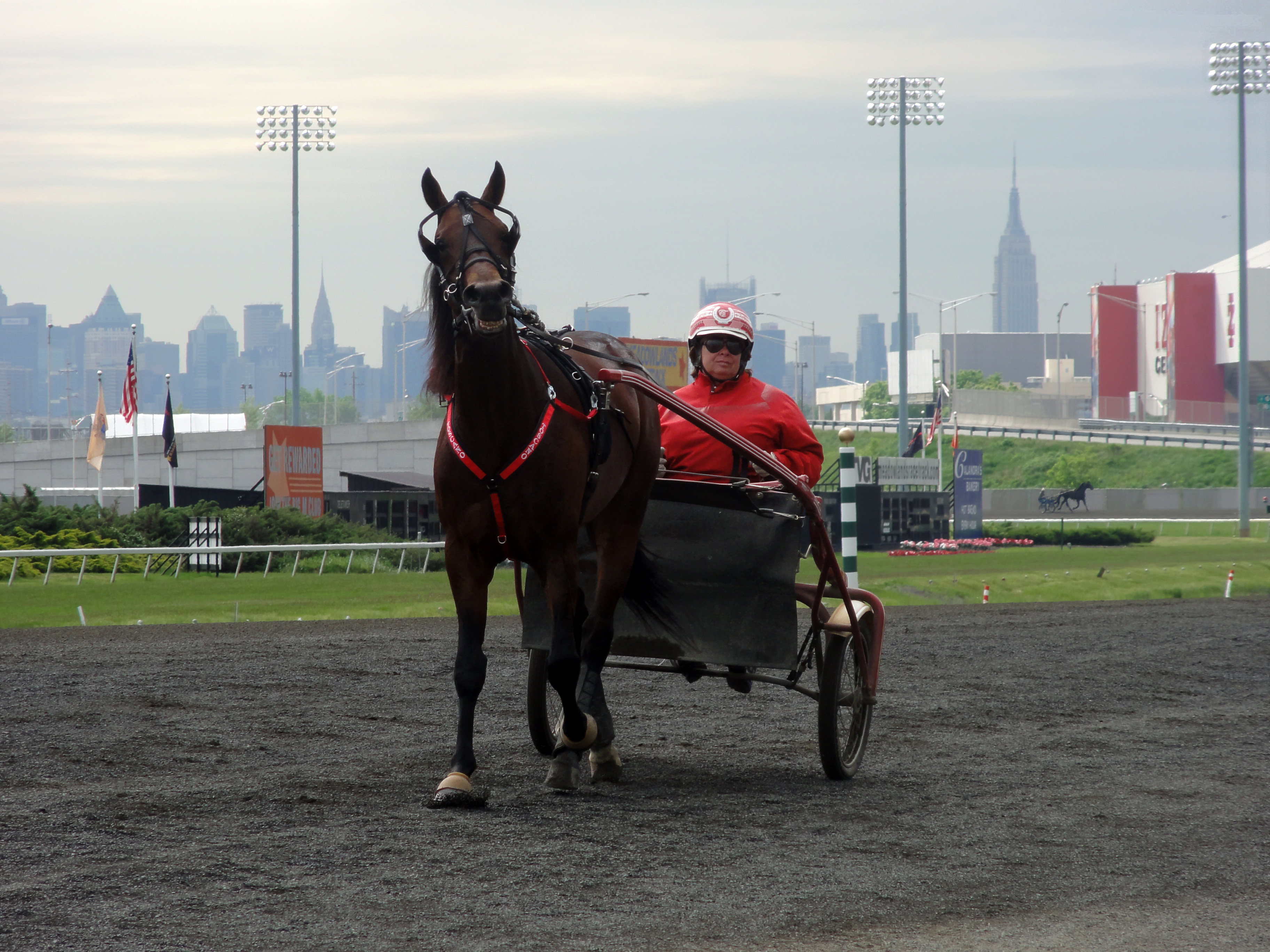
Putting on her hat as a trainer of mostly young horses in a stable of roughly 40-head, Toscano like many is in a holding pattern. The absence of live racing has not limited the training progress of Toscano’s top-rated 3-year-old trotting filly Senorita Rita. "I would say she’s the least impacted by this," said Toscano of last year’s Goldsmith Maid champion. "We had planned to get her ready for August."
On the other side of the fence are returning 3-year-olds that showed promise last year but didn’t get the experience necessary for Toscano and ownership to pursue extensive staking. For those youngsters, a few races in March and early April would be key towards making critical April 15 stakes payments with at least some knowledge.
"We had six or seven that were ready to qualify and we were hoping to get one or two races into them just to see where they were going," said Toscano. "We just had to make staking decisions on those horses blindly."
Perhaps going forward those same horses will be found in difficult positions of playing catch-up when races actually begin and those with far more experience have a distinct advantage. Yet Toscano also saw a bit of a silver lining in the timing of the shutdown. "At least I didn’t qualify them and was able to back off with them," said Toscano. Thus there's a chance to preserve their long-term viability.
Toscano recognizes that the 3-year-old stakes season is likely to have a lot of different looks to it with the spring schedule already decimated. "I think we can go longer into the year," Toscano said, indicating that some of the races that have needed to be postponed could be re-spotted and thus we might see some significant stakes races in November or even December of this season.
A pair of 3-year-old pacing fillies enjoyed plenty of success last year and both Rocknificent and Baby Your the Best are coming back quite nicely. "Rocknificent is more mature and easier to handle," said Toscano of the Captaintreacherous-sired filly that closed out her juvenile campaign with an impressive second-place finish in the Three Diamonds from post 10. Rocknificent was just a neck shy of J K First Lady in the 1:49 2/5 mile in November at The Meadowlands. The placing pushed her seasonal bankroll to $281K in 13 starts, all of which came in stakes races.
Toscano noted that last year’s Meadowlands Pace upset winner Best In Show was returning on schedule before the schedule changed. "We had him right at 2:00 when racing stopped," said Toscano. "He’ll be ready."
Best In Show, a homebred son of Bettor’s Delight from the $2.4 million winning Put On A Show, stunned the racing world when he captured the Meadowlands Pace last July in a personal-best 1:48, taking the measure of divisional champion Bettor’s Wish and favored Captain Crunch in the process.
On the trotting side of the equation, Toscano could have a potential star in the New Jersey-bred Play Trix On Me. Is he a Grand Circuit horse?
"I think he is," Toscano said. A New Jersey Sire Stakes champion prior to joining forces with Toscano last summer, Play Trix On Me started but six times during a freshman campaign while showing extreme speed and potential, with a 1:53 2/5 qualifier at The Red Mile in October. He’s a son of Hambletonian champion Trixton. With the limited experience last year, Toscano had hoped to have Play Trix On Me racing at this time. "He’s all dressed up with nowhere to go," said Toscano.
There are 26 2-year-olds in training right now for Toscano. "We’re in the low (2:) 20s with them. I’ve got some really nice trotting fillies and some really nice pacing fillies," Toscano said.
Toscano noted that like all trainers, nothing has changed for her when it comes to the care and conditioning of her horses every day. Like most, she has done a masterful job over time, managing horses and the risks that come with them. It’s that experience that’s likely to see her and most of this industry better equipped to handle whatever the next phase turns out to be.