
Harness: Qualifiers spark some thoughts on time
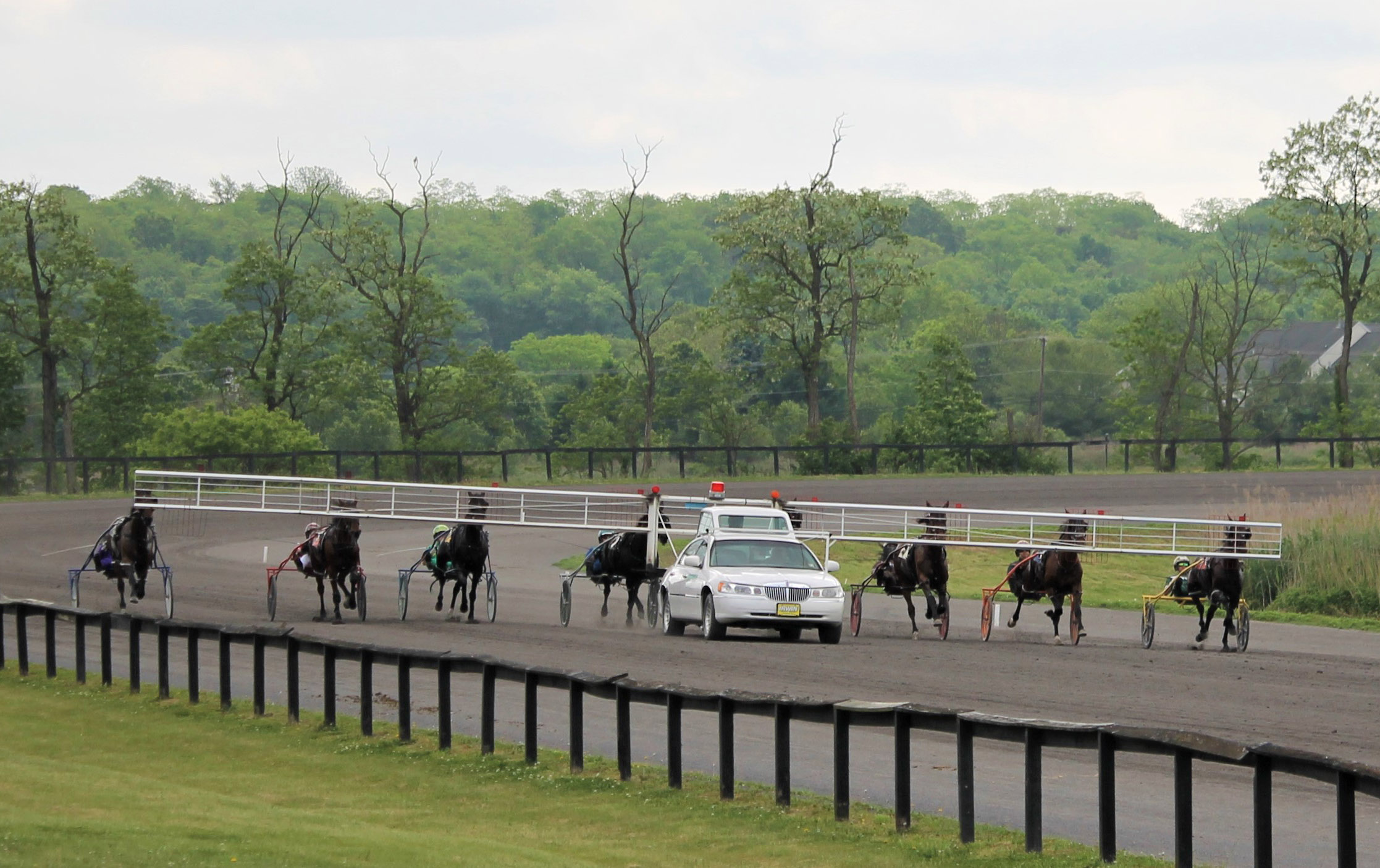
It was sweet to experience the return of harness racing to New Jersey on May 29 at Gaitway Farm and to add a new title to my list of potential functions in the sport - timer.
The marathon 24-race card went off without incident. Everyone I saw, outside of some drivers heading onto the track, had the proper PPE (personal protection equipment) with them, so, basically, a mask of some sort. Social distancing was observed by all parties, and even the Judges stand was modified to place partitions between all of the officials, including me, until I was ousted to isolation in a pick-up truck situated a few feet away. Yeah, as the new guy in the booth, I drew the short straw. Actually, there was no draw . . . it was just me packing my bag and relocating to a sunnier but conveniently more isolated location.
My function was to serve as one of three timers since Gaitway doesn’t have a tele-timer system. I jumped at the opportunity to get out of the house and be part of the "essential personnel" crew at a track with horses racing. My last on-track visit was November at The Meadowlands, and with fans prohibited from tracks for the foreseeable future, who knows when my next visit will occur.
Throughout the years, I've hand-timed many workouts and training sessions to unofficially report the results to the public or just for my own reference. Friday marked the first time I would participate in the process with the results ultimately appearing in the official charted lines. I have charted races, been a track announcer, driven in races, and been an owner, but never a timer.
The task is rather easy. You press a button four times during the race and compare your results with two other timers. The majority of the time we all were within one-fifth-of-a-second of each other, which is a more than acceptable margin of error. The only clocking that sometimes varied was the three-quarter call, since being at the finish line more than a quarter of a mile away is a tough angle to eyeball exactly.
With the task being so easy, other than doing some mathematics in my head to add the quarters together, since my phone stopwatch didn't offer that feature, I had plenty of time to think about timing and what we use as the standard in the sport.
I've always been a strong proponent of maintaining our current system of timing in fifths-of-a-second. To me, whether a horse went in 1:51 or 1:51 1/5 was rather irrelevant. Then Friday arrived and I would look down at the timer and see 1:50.99, which in Harness Racing is 1:50 4/5, even though it is much closer to 1:51. So, in theory, a horse can finish a fifth-of-a-second faster and have the same final time. That's nearly one full length! Maybe I've been wrong all this time and we should be timing in hundredths.
The inaccuracy becomes even greater when hand-timing. If two people time the race and one gets 1:50.99 and the next person gets 1:51.20, you have, in theory, a two-length difference, unless the timer with the 150.99 reports it as 1:51. Ultimately, I guess no damage is done since you'll likely go with the middle of the two numbers, but the final clocking would be more accurate with hundredths.
Interestingly, the USTA was supposed to switch to hundredths back on January 1, 2016. About seven weeks before that change, the Executive Board decided to put off the change, mostly because some member tracks either weren't prepared or refused to update the equipment to accommodate the change.
In my head, I still don't know if, when handicapping, I'd really put much weight into the difference between 1:50 and 1:50.19, but it probably wouldn't hurt to have the information. Of course, the record books could be mixed with varied times for decades, and what do we do if a horse goes 1:46.19? Does he get to share the spot as the all-time fastest with Always B Miki and Lather Up at 1:46 or does he need to go 1:45.99 or faster to earn a record?
What about a happy medium? Instead of fifths or hundredths, what if we timed in tenths? That would narrow the gap while still using just one digit after the time. So, if a current-day horse stopped the timer in 1:50.12, they would have a time of 1:50.1 instead of 1:50. It's not as precise as hundredths, but keeps the same format as we are accustomed to, though it could be confusing at first with 1:50.1 meaning 1:50 and one-fifth on some past performance lines and 1:50 and one-tenth on others. The best solution for that is for the USTA to collect the data in tenths for a year or more while not disseminating it and then switching to the new timing. Or, maybe I'm thinking too much about something that isn't necessarily "broken".
Knowing the sport's aversion to change, I doubt we ever see the timing change. I certainly won’t lose any sleep over the lack of movement on the topic, but it makes more sense to me today than it did a few years or even a few days ago.