
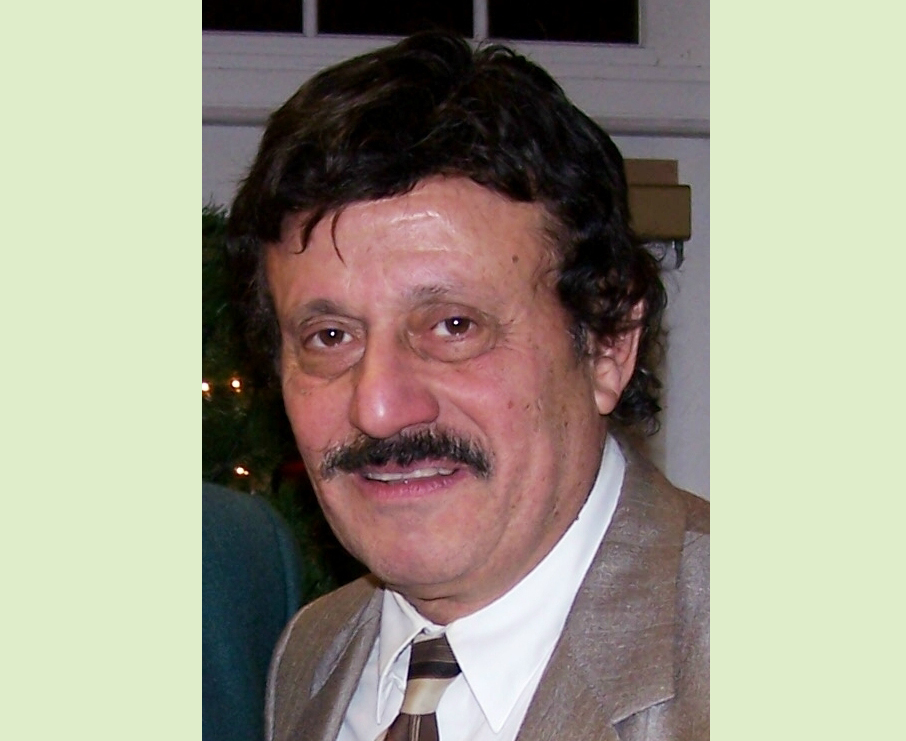
Harness: Profile of legendary publicity man John Manzi
What kind of car do you drive?
Ford Fusion.
Favorite dinner meal? Snack?
Salmon with Quinoa and Peas; Ice Cream.
What was your favorite all-time track to visit?
I always liked the old Meadowlands. It is different now, though.
Do you still go to the track?
I still go occasionally, like when I write a story for the Billings or North American Amateur Drivers Association.
When is the last time you went?
Probably March. You can't go anywhere now.
What is your favorite big event in racing?
I always enjoyed the Hambletonian. It is a nice day for the sport.
Do you still think about racing and the sport often?
Of course. That's been my life. I've never done anything but publicize and write about the sport.
What is your favorite thing to do outside of racing?
I enjoy my Doo Wop radio show. I have a collection of records that I play on the air. The second Sunday in October will be my 37th anniversary on the air.
What is your favorite sport to watch? Team?
Baseball. I was a New York Yankees fan. I grew up in the 1950s with the dynasty. I have gravitated, as I've gotten older, to the Mets, too. So I guess I'm a New York fan now. I remember watching Don Larsen's no-hitter on TV. I was a fanatic collecting baseball cards until I got hooked in Harness Racing.
What is one thing about you most fans/bettors don't know?
I'm a pretty honorable guy. I have friends and stick with them. Also, I was never a gambler, maybe that is why I never made any money...lol. I was probably the least paid publicist ever.
What is one word that describes harness racing for you?
Joy.
How did you get started in the sport?
I was born into it. My dad and my uncles raced horses in the early 1950s. I decided to race horses. It worked out alright. I never made a ton of money, but I was never a guy who needed a ton of money.
The USTA doesn't have records dating back to the 1960s. Did you train horses?
I trained and drove. I drove a couple hundred winners before I stopped and joined management. First race I drove and won was at Freehold Raceway in October 1962.
What is the best advice you've ever gotten about harness racing?
Be true to it and it will be true to you. I love the sport and I'm sort of demoralized with what is happening now. I'm 76 now and it is not like it used to be in my 30s, 40s, 50s and even 60s.
What is the best advice you've ever given?
Be an honest person. Also, don't mess with drugs and use your ability as a trainer. Horse drugs have ruined the game. Harness Racing is hurting now. I remember when I was a kid in the late 1950s and 1960s, Harness Racing was the fastest-growing sport. Now people don't even know about it.
What was your favorite moment in harness racing?
One of my favorites was winning a race at Phoenix Trotting Park. I raced a horse called Dutch Bomber for Frances Nelson. It was the HTA Pace, which was a big race back in those days. It was a series that went from track to track.
I could write a whole book about the trip out to Arizona from Monticello. I was working for Bill Dawkins at the time. We went with 11 horses. It took us a week to get there and my wife contracted hepatitis along the way.
You are known for coming up with wacky promotions as the Public Relations Director at Monticello Raceway. How did that all start?
I grew up watching Allen Finkelstein at Monticello Raceway. He was sort of the Godfather of Publicity. He didn't know much about the horses but he could certainly get the word out. Then I worked for a guy named Andy "Satch" Furman. He became the Director of Publicity and I worked for him. He was a wild and crazy guy. He used to come up with the wackiest ideas. The way I saw it is there was ink (promoting the sport) in those types of stories. I got a lot of ink over the years.
What's the craziest idea you came up with? Did it work?
Most everything I did worked. If you get any publicity from it, then it worked. I had foot races for the drivers. They raced a quarter-mile at Monticello. I had two divisions.
Which promotion was the most popular?
Maybe the best-looking driver contest. The series of races for ethnic drivers was very popular. You know, you were in one of them. I just did things. I learned that from Andy Furman. I had Beasley Reece (NFL player with Giants, Cowboys and Buccaneers) outrun a horse. That was one of my favorites. I had him matched with a horse I pitched as the "losingest" in the world. He beat the horse. I told the guy, if you beat Beasley Reece I'm going to shoot you off the jog cart. We got a lot of play with that one.
Were there any ideas which you wanted to try but couldn't for whatever reason?
Anything that involved money because I was always handicapped by a low budget. I had to come up with ideas with imagination.
You once told me, 'Never let the truth get in the way of a good story'. Did that serve you well?
That was my motto. Of course it was tongue in cheek, though I did exaggerate on a few things over the years.
You were elected to the Communicator's wing of the Harness Hall of Fame in 2006. What did that mean to you?
I could've been in earlier but I was a member of the steering committee for the Hall of Fame for eight years. I helped a lot of good people get into the Hall of Fame including Joe DeFrank. The industry sort of passed him up. As soon as I left the committee and became eligible, I got elected right away. As far as getting in, it was a great honor and it means a lot for people to recognize that I did things that were beneficial to the industry.
You retired late in 2014. Was it time to go? Do you miss it?
It was time. Monticello had changed a lot. I miss it but I think I made my mark, not that I was out to do that.
You still do press releases for amateur racing. Is that important to you?
I think it is a very important part of the sport. How do you get new blood involved without it? When I started there was only the Billings with Phil Pines covering it and NAADA. It gets people involved. There are a lot of dedicated people involved, like Steve Olford, who is involved in almost all of the clubs.
How has COVID-19 affected your life?
Everyone is staying at home. I think it is a big bunch of bullsh@@ and things aren't as bad as they say. In 1918/1919 during a pandemic millions died and they didn't stop a thing. They played baseball and football. Basically I'm pretty much home-bound. You can't go anywhere.
If you had the power to change one thing in the sport, what would it be?
Get rid of all the cheaters. They give the sport a bad name. There are a lot of horsemen that cheat with drugs to enhance abilities. But they'll never get rid of them. It is like getting rid of junkies, you can't get rid of them.
How do you view the future of harness racing?
I think it will be a struggle. It started in the 1970s with Off Track Betting. That was the beginning of the real end for Harness racing and perhaps for all racing, because you no longer had to go to the track to bet. That took away the pleasure of enjoying the racing. We've gone all downhill since then.
Time for the stretch drive:
Best Horse You Ever Saw: Bret Hanover -- 'The Big Bull'
Best Driver Ever: Billy Haughton, but it is like apples and oranges comparing generations. Guys now are just drivers. Back in the old days most people were trainers and drivers. Hughie Bell was among the first catch-drivers. There are a lot of great drivers now, but the best driver is probably the one with the best horse.
Best Trainer Ever: Ron Burke. It is hard to say he is not.
Lasix -- Yes or No?: I think it probably masks a lot of things and maybe we should do without it, but I don't have an axe to grind on that topic.
Favorite TV Show?: Right now, Perry Mason. I can watch it five times a day on different channels.
Trotters or Pacers?: Any good horse. Trotters take a better horseman. Anyone can put hobbles on a pacer and watch them go. Nowadays it seems that horses come out of the field ready to go. That game is much more refined now.