
Harness: Judges making poor decisions
Something fishy has been going on at Yonkers Raceway. To be more precise, I find the need to question the action of the Judges lately. While admittedly the decisions have not been nefarious, they certainly warrant a closer look.
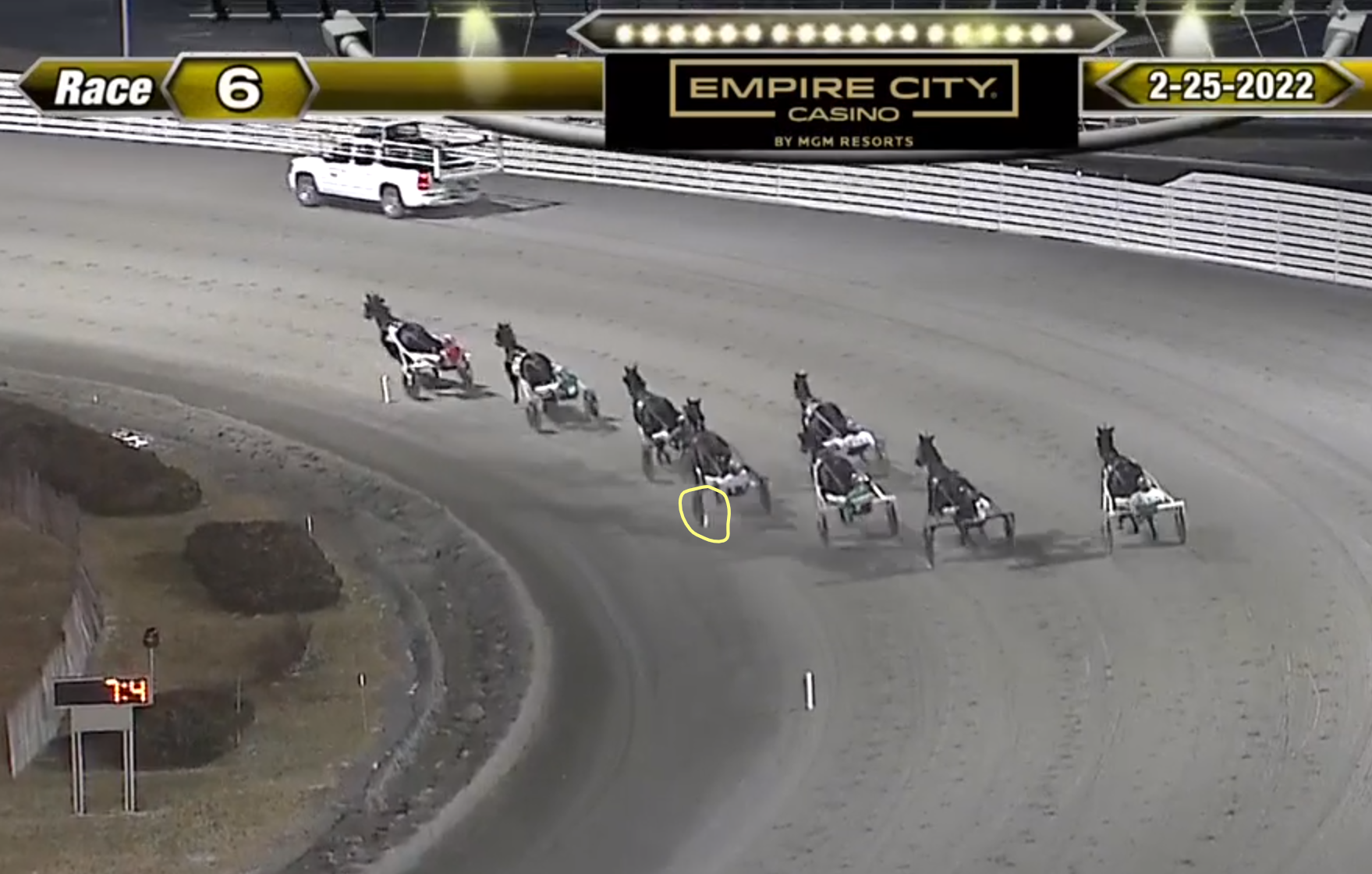
First we take you back to the sixth race on February 25. Eurobond was sent off at 3-5 and got away slowly from post one. As driver Matt Kakaley guided him around the first turn they clearly cut inside one pylon and grazed another towards the racing surface side of the track (so they didn't go inside). This incident happened on the first turn and it was hard to make a case that an advantage was gained.
Fast forward to the finish and Eurobond comes charging home to defeat Barry Black on the wire by an inch or so. Justifiably, the Judges immediately post the inquiry sign to investigate. After about three minutes Eurobond was disqualified and placed second.
While I didn't agree with the decision because there was no advantage gained, the Judges made a call and in the end that's fine as long as they do so consistently. But that was only the beginning of the story. Ten days after the disqualification the decision was reversed. You heard right, the disqualification on Eurobond was rescinded and he was made the winner.
The connections of Eurobond appealed the decision and brought to the table evidence that Barry Black (the horse who was placed first) also went inside a pylon coming off the second turn during the same race; something clearly missed by the Judges in the moment. Presented with the new information the Judges asked the connections to drop the appeal and in turn the decision would be reversed.
"There is no written rule so it is tough with New York," said Eurobond's trainer Michael Spaccarelli. "It is at [Judges] discretion, so it is tough. They handled it well after I brought it to their attention."
While the connections of Eurobond would now receive the winner's share of the purse, all of the people that bet on him at 3-5 in the win pool or likely in large amounts of the $72,541 of other exotic pools got nothing!
"The only people who suffered is the betting public," said Spaccarelli.
The Judges, who are in place to ensure the integrity of the sport and protect the wagering public, screwed them over. While the actions were certainly unintentional, one has to wonder whether the three people in the booth were properly reprimanded for missing Brennan's horse leaving the course or simply for potential negligence if you feel going inside one pylon on the first turn is not an actionable offence. Additionally, there seems to be clear video evidence that Jason Bartlett driving Magical Journey went inside a pylon off the third turn and they were not placed back from seventh to eighth. Not that it matters on a wagering front, but it does speak to the issue of consistency in the decision-making process.
On top of the above, the fact that it only took three minutes to make the decision to disqualify Eurobond implies that the Judges were confident that they made the correct ruling. That is scary!
In the interest of complete transparency, I reached out to the New York Gaming Commission in early March after the incident and expressed my concerns about the actions of the Judges along with the non-existence of clearly defined "racing inside the pylons" rules. My thought was that this communication would bring light to the situation and prevent further issues. I wasn't inclined to write anything because there was no need to throw anyone under the bus when hopefully it could be addressed internally.
Like the Judges on February 25, I was mistaken.
On March 29 at Yonkers another pylons incident occurred that had me shaking my head. Gotafoolishdesire was sitting the pocket and went inside four consecutive pylons (he did hit the last three but was clearly on the non-racing side of the track). Driven by Jim Marohn, Jr., ultimately the pacing gelding finished second by a neck and was disqualified to third.
► Sign up for our FREE DRF Harness Digest Newsletter
The placing was 100% justified, though the execution left me wondering. The top five finishers in the race were separated by just 2 1/4 lengths and the horse that was fourth was directly behind Gotafoolishdesire at the wire. Certainly the advantage gained was enough to place it behind at least the fourth-place finisher and perhaps the fifth? At the very least, that the Judges took more than five minutes to deliberate shows they put ample thought into the final result.
Perhaps blaming the Judges at Yonkers for the multi-pylon decision is misplaced. The common denominator in many pylon-related decisions in New York seems to be the lack of clearly outlined rules on the issue. Reviewing the NY regulations, only 4117.2 (c) and 4117.4 (r) apply.
4117.2 (c): " . . . in races contested at a track without a continuous hub rail . . . Any horse or sulky that may partly leave the course shall be disqualified one or more positions, as appropriate, if, in the opinion of the judges, such occurrence has had a material effect on the finish of the race."
4117.4 (r): "The following shall be deemed racing infractions: Crossing the inside limits of the course."
In the wagering section of the NY regulations it states that the Model Rules of Racing from the Association of Racing Commissioners International will take precedent if something isn't covered in the document. RCI mentions the following about hubrail violations:
"If at a racetrack which does not have a continuous solid inside hub rail, a horse or part of the horse's sulky leaves the course by going inside the hub rail or other demarcation which constitutes the inside limits of the course, the offending horse shall be placed one or more positions where, in the opinion of the judges, the action gave the horse an unfair advantage over other horses in the race, or the action helped the horse improve its position in the race. In addition, when an act of interference causes a horse or part of the horse's sulky to cross the inside limits of the course, and the horse is placed by the judges, the offending horse shall be placed behind the horse with which it interfered."
Thankfully not all states allow the Judges such wide discretion when considering pylon violations. Both New Jersey and Pennsylvania are quite clear and remove much of the gray area from the decision-making process.
New Jersey, which adopted new pylon rules on July 21, 2021, as well as Pennsylvania, follow the USTA rule. That basically says the following:
* Going inside one pylon results in a Judges decision as to whether the horse had an unfair advantage.
* Going inside two consecutive pylons results in the horse automatically being placed behind all horses lapped on that horse.
* Going inside three or more consecutive pylons results in the offending horse being placed last.
"The issue is that a horse that is 10 lengths in front in the stretch would be DQ'd under the USTA rule, which seems unduly harsh for a transgression that doesn't affect the outcome. Judging is just that, application of judicial discretion," said a source from the New York Gaming Commission, who intimated a willingness to consider alterations of the rules if it was in the best interest of the sport.
The 10-length comment brings up an interesting point of whether the three-pylon rule is too harsh. Is there a happy medium that would satisfy New York while bringing more clarity to the situation? What if the rule read, "If a horse goes inside three or more consecutive pylons they are automatically placed last unless they are at least three lengths ahead of the horse that finishes directly behind them at the finish line. If the horse is three or more lengths clear it becomes a Judges decision on whether the horse should be disqualified."
Of course, even if New York adopted the USTA language that would not have changed the Eurobond fiasco. Sure, appeals occur and the decisions of Judges are overturned, but these are usually tight calls where you can easily make valid arguments for both points of view. Two such decisions which immediately come to mind are the What The Hill Hambletonian and the Charlie May Meadowlands Pace disqualifications. Both were appealed, and while neither has been overturned (at least not yet), I think anyone who bet those horses and were denied the opportunity to cash a ticket could stomach a change in the outcome via a court ruling. A quiet side arrangement where a bad decision is reversed, that is much harder to accept.
Doesn't the public deserve to know that the Eurobond decision was reversed? If the incident went through the appeals process this information would've been public knowledge rather than swept under the rug so the hundreds or thousands of people who bet on the horse and were wrongfully stripped of their profits were left in the dark. To me that is not protecting the public.
Judges, like umpires, referees, and officials in all sports make mistakes. The system involves humans and thus is fallible. That may not be ideal but it is acceptable, as long as transparency exists and efforts are taken to improve for the future. Hopefully the pylon incidents at Yonkers serve as a learning experience.