

Harness: Evaluating the track surface changes at Yonkers, Meadowlands
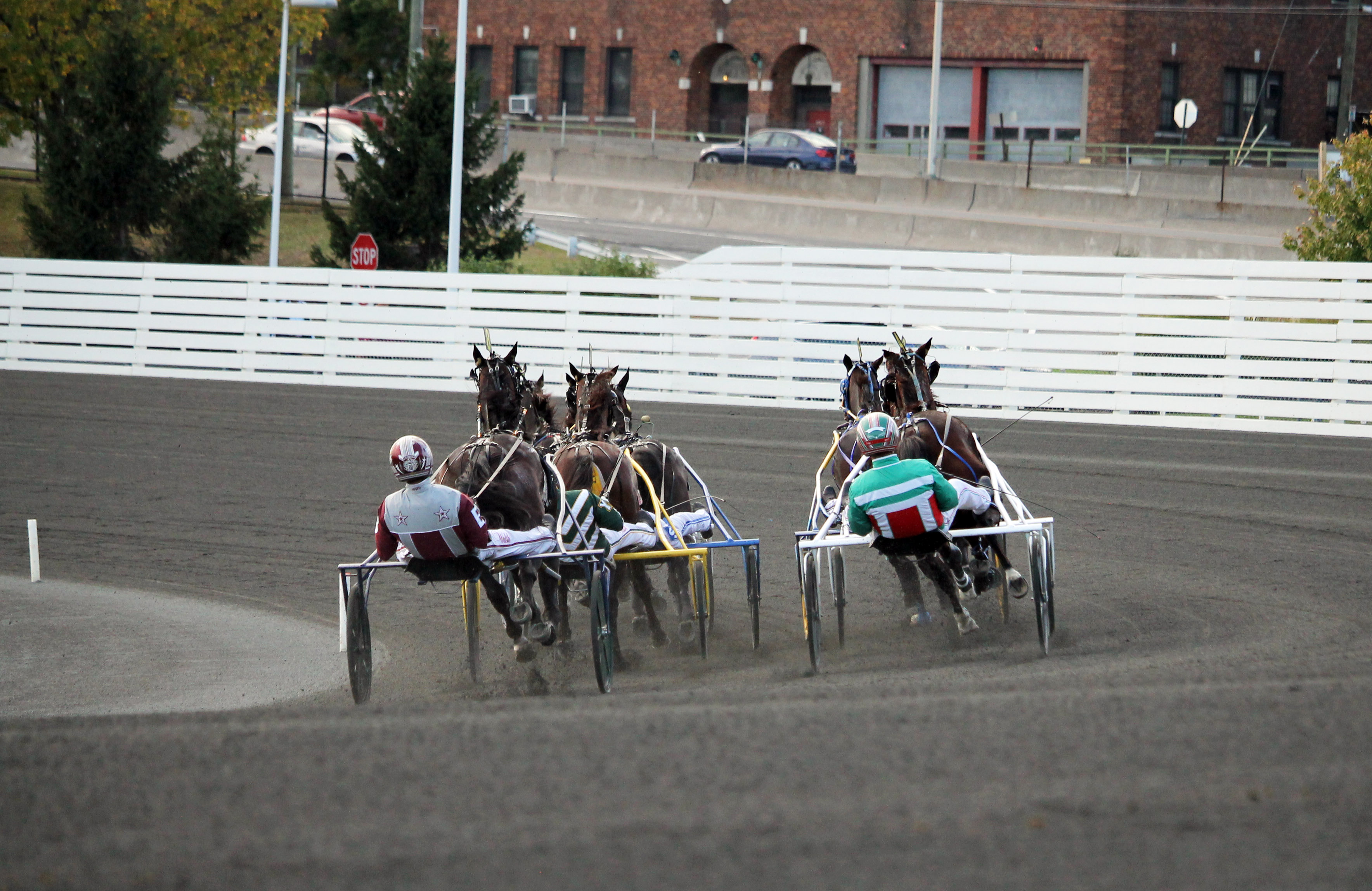
Standing in the winner’s circle at Yonkers Raceway awaiting the International Trot, I couldn’t help but take notice of the banking into the first turn. Having attended the races at the Westchester County oval many times and even driven over the surface dozens of times in the first decade of the century, the steep incline quickly caught my eye.
The idea behind the banked turns is to create more of a slingshot effect for horses races in the outside paths so they don’t lose momentum while racing wider than those on the inside of the track. It is the same reason why many auto-racing tracks are banked.
Ironically, my first thoughts when I saw the banking was of The Meadowlands’ surface. After the Hambletonian the track publicized back in August that it was going to re-bank the turns to provide a better chance for horses to win from off the pace. The weekend of the International was also the first racing at The Big M since the announcement.
Watching the races remotely I didn’t notice an increased bank, but to the naked eye on a computer screen it would hardly jump off the screen. The results certainly didn’t lend to a fairer track for horses coming from behind. For 52 races, 27 winners won on the lead and only 10 winners were further back than fourth at the three-quarter call.
When talking to Meadowlands trackman Ryan Napierala back in August about the revamped surface, he told me the proof of concept would be speaking with the drivers after opening weekend for their thoughts. He also added that if needed he would keep working on the turns until they get the desired result. Well, the verdict is in and it’s a work in progress.
“I honestly didn’t see much difference,” said Tim Tetrick, 2019’s earnings leader among drivers in North America. “They didn’t bank the track like two or three wide, it looks like it’s banked six or seven wide.”
“I had no clue they changed the turns,” said Scott Zeron, who drives regularly at both Meadowlands and Yonkers.
Driver Joe Bongiorno, who won a race from off the pace and on the lead at The Meadowlands on opening weekend, admitted that he doesn’t pay too much attention to the banking, which we could perhaps read into meaning the change was unnoticeable.
Napierala took the constructive criticism in stride. “I honestly didn’t think they would notice much of a difference. The track turns are pretty banked compared to most tracks, but because it is a mile track and it is so big, the straightaways are flatter and you come into the turn and don’t realize how much banking there really is,” said Napierala.
As expected with the new material on the track and the lack of racing over the surface, both Tetrick and Zeron agreed that the footing was a bit loose on opening weekend but the surface was still very good.
“I was very pleased with the track the other day. The footing was good,” said Tetrick. “It takes a little while for a track to get setup properly. The problem at The Meadowlands is they don’t have horses training on the track. Horses do more for a track than any piece of machinery.”
Like perennial leading driver Yannick Gingras said in the above-mentioned article, Tetrick agreed that a steeper bank is necessary to produce results.
“It was banked 3 or 4% before and they put it to 7% I think, so how much of a difference do you expect to see? I always told them to do it like Solvalla at like 25%. If you are standing four wide on the turn at Solvalla, you would almost slide right down if there was snow on the ground.”
While Solvalla turns at The Meadowlands are a pipe dream, Napierala’s plan is to keep adjusting until most people are happy.
“We’ll just keep doing what we normally do, which adds to the bank naturally. I’ll just keep going until they tell me it’s too banked,” said Napierala, who added that the rain on Wednesday (10/16) really helped to settle down the track and pack it in.
Another interesting point when it comes to the banking in the turns is that drivers have to test the waters before we will ever know whether what currently exists is a success. Now that the track has settled and we’ve had well over 20 races over the surface, drivers who may have been pre-programmed to avoid going wide on the final turn will need to attempt those aggressive moves to see if it works.
Additionally, Napierala felt as the seasons change from fall to winter to spring again, the banking will become more of a noticeable factor.
“Come April you’ll see a big difference after the snow is cleared and we’ve removed the material that we took off and then put it back on and re-shape it,” said Napierala.
It contrast to Meadowlands, the banking in the turns at Yonkers has undergone a major transformation over the last few months, but Zeron and Bongiorno, despite applauding the new surface, still don’t feel it plays the same as some other half-mile tracks like Northfield, known as the ‘Home of the Flying Turns’.
“If you were to compare Northfield and Yonkers, not to knock Yonkers, it is two different racing styles. At Northfield you can sit on the outside and rate one and keep them alive. At Yonkers if you are out more than two turns, you aren’t getting a check,” said Bongiorno, who said the current racing surface is night and day difference at Yonkers from only three months ago. “[Yonkers] is more banked than where it was last year but it still isn’t where it needs to be. You need more bank in those turns to be able to make up ground. If you go three-wide early in the last turn at Yonkers, you have no shot.”
“You can’t sit outside for two turns competitively and win at Yonkers. It is very tough,” said Zeron, who seemed frustrated that drivers keep getting flak for not pulling early in the mile at Yonkers despite the conditions playing against that maneuver. “There is something about Freehold, Flamboro and all of those other half-mile tracks I’ve raced on, you can drive them like a normal half. Yonkers you can’t for some reason and we get so much grief for it.
“I think it is the positioning of the poles,” continued Zeron. “From the quarter pole to the half, you can’t power-move. You get to the half too quickly. You have to move into the turn and can’t gain ground and then in the straightaway the guy parks you.”
Tetrick, who drives less frequently over the Yonkers surface, said he thought there was some improvement. “I had a couple of horses two-wide the other day and it didn’t feel like the old Yonkers were you had to work hard to keep up. I could kind of wait out there and take my time,” said Tetrick.
Whether Yonkers and The Meadowlands are where they need to be in terms of banking in order to get the desired results, both tracks are clearly moving in the right direction. Yonkers has transformed from a surface where some trainers have told me they wouldn’t consider racing on to a place where numerous people have spoken in glowing terms over the track. Meadowlands has always been and continues to be a destination for those looking for a great surface and with a bit more bank in the turns, maybe they can turn back the clock to the days when horses frequently seemed to close from the New Jersey Turnpike to win races.