
Harness: Bad driver decisions linger forever
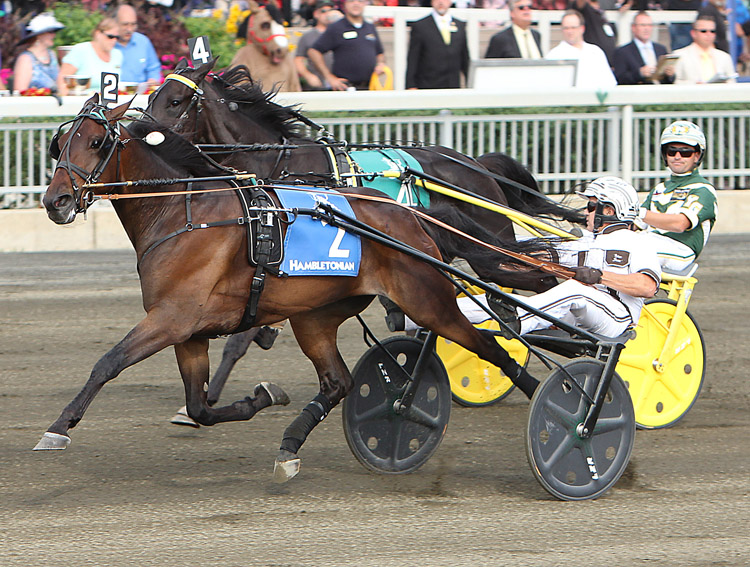
It was good to be a harness racing driver in 2021. Examining the top 50 leaderboard on the USTA website, the last person on the list took home $143,515 from his five percent commission, the 25th cleared checks of $236,457, and those lucky enough to reside in the top five averaged $565,050.
Even looking at a low-level track in terms of purses like Monticello, the leading driver Mike Merton grossed $53,168 for the year, though it is worth noting that he moonlights at Saratoga and other tracks. With enhanced purses at Plainridge Park and the addition of Cumberland, even some New England natives like Bruce Ranger, Shawn Gray and Kevin Switzer Jr. checked in with higher earnings totals in 2021.
When you consider that according to Census.gov the median income of a full-time male (all of the top 50-earning drivers are male) in the U.S. for 2020 was $61,417, it seems the drivers in North America are making a good living. Of course, many of the drivers in the top 100 have larger commuting expenses than the "Average Joe," and the job of driving a horse is a bit more dangerous than sitting behind a desk, but it's not like some professions – police officers and firefighters for instance – don't come with risk.
While life as a catch driver can be profitable, it often involves making daily choices that can have a huge impact on the earning potential of the decision-maker. Since many drivers are listed on multiple horses, before they get in the bike there is a choice to make on which horse they want to steer. There are many factors - barn loyalty, horse quality, trainer, owner, post position – that go into the final commitment, and in major races the stakes are truly high.
We recently caught up with a number of the top drivers in the sport and posed the question, "What was your worst pick-off decision?" In some cases there were deep regrets as the money lost was substantial, while with others the page had clearly been turned years ago. Most interestingly, some of the decisions were made behind the scenes, and this is likely the first time they were made public.
For driver Yannick Gingras the most obvious selection gone wrong was choosing to drive Mission Brief in the second heat of the 2015 Hambletonian over eventual winner Pinkman. Six years later he stands by that call.
"Honestly, if I had to pick again I would do the same thing. I just thought it was the right move and it didn't work out. Hindsight is 20/20. That is probably the worst one because of the result," said Gingras before reflecting on other possibilities. "Other than that, maybe Downbytheseaside. I had a chance to jump on him for the [2017] North America Cup and I didn't. That's one I wish I could take back."
While Gingras is still seeking his first Hambletonian win, driver Scott Zeron has seen plenty of luck in the trotting classic and owns a pair (Atlanta, Marion Marauder) of victories. His bungled pick-off decision came almost a decade ago.
"Nobody knows, but Nifty [Norman] had asked me – I was driving a bunch of horses in Sire Stakes for him – to go to Kawartha Downs to drive Bee A Magician [2012] and I said, 'do you like her?' and he said, 'she's ok.' That's what Nifty says even about the great ones, so you don't know what to expect. I told him I would just stay at Mohawk and my dad [Rick Zeron] will go drive her. He ended up driving her the entire 2-year-old season."
Bee A Magician would go on to be one of the best trotting mares in history, winning Horse of the Year in her 3-year-old season (2013) and earning over $4 million in her career. Interestingly, Scott Zeron got a chance to drive her one time in a May leg of the TVG series at the Meadowlands and won. He would never drive her again.
Driver Brett Miller took us back to 2007 for his "poor judgement" moment. "At The Meadows in the 3-year-old colt Sire Stakes I chose off Won The West to drive a horse that ended up being a conditioned claimer [Paradise Ragtime]," said Miller.
Won The West, who didn't race as a 2-year-old and in 2007 as a sophomore didn't look like the $3.9 million career winner he would become, went on to win the Jug Preview, Tattersalls and American National later that year.
"Probably Royalty For Life because he won the Hambo [2013]," said Tim Tetrick about his biggest gaffe.
Leading up to the 2013 Earl Beal Memorial at The Downs at Pocono, Tetrick had options. He drove Smilin Eli to victory in one elimination and finished second with Royalty For Life in the other. He ended up taking Smilin Eli in the final and he finished fifth while Royalty For Life broke and was last, so all was looking good before Royalty For Life came back to win the Hambletonian. It wasn't a complete loss as Tetrick finished second in the race with Smilin Eli.
Andrew McCarthy's full-time North American driving career started in 2009, and he took us back to those early years for his decision-making error. "One that comes to mind is Golden Receiver," said McCarthy. "I took Mucho Sleazy over him early in my career [April 17, 2010 at Pocono] and Golden Receiver went on to a great career."
Golden Receiver averaged $255,000 earned in 2010 and 2011 before taking home $941,025 while finishing second to Foiled Again in the Dan Patch voting for Older Male Pacer of the Year in 2012.
While some could say harness racing is a cutthroat sport, those people never met driver Corey Callahan. Arguably the nicest person in the industry, he once lost the opportunity to drive top trotting mare Maven because he didn't want to blindside his fellow linesman.
"[Owner Bill] Donovan wanted to fire Yannick [Gingras] and [trainer] Jonas [Czernyson] called me and asked if I would drive her," said Callahan. "I said 'yeah, sure, but just give Yannick a heads-up before the sheet comes out.' Yannick got Donovan's number, called him, and the rest is history. I never drove the mare and he crushed. Guess I'm just too nice [laughing]."
► Sign up for our FREE DRF Harness Digest Newsletter
Andy Miller, who sits just a couple hundred wins away from 10,000 lifetime, had a major decision to make in 2007. He drove the relatively unheralded Southwind Lynx to a convincing 2 1/4 length win in a non-winners-of-2 race at the Meadowlands and was in line to drive him in the Art Rooney elimination at Yonkers Raceway 10 days later.
"I decided not to go and he ended up winning a couple of million-dollar races that year," said Miller, referring to the Rooney and Meadowlands Pace, both won with Tim Tetrick in the bike.
Driver David Miller responded with one word in a nanosecond when asked about his worst pick-off: "McArdle".
Things were looking up as Miller chose Art's Tribute after he won the 2002 New Jersey Classic elimination, but McArdle won the final and $1.3 million that year while Miller never drove the horse again.
For Mark MacDonald, a fork in the road came in a qualifier and he went down the wrong path.
"Michelle's Power," said MacDonald about the horse he elected not to take. "I won the Sire Stakes final with her at 2 [2006] and she drew in a qualifier with another filly from the same barn the next year. I asked the trainer [William Elliott] which one I should go with and I went with Southwind Rio. She never came back good and Michelle's Power made like $1.3 million."
Finally, there is one selection gone wrong that I remember very well. We were at the press conference for the Meadowlands Pace in 2011 and I asked Brian Sears whether he would take Feel Like A Fool or Roll With Joe. He said, "Who would you take?" and I responded Roll With Joe. Quite ironically, he took Feel Like A Fool and finished seventh while Roll With Joe won with Ron Pierce in the bike.
Sears concurred that the decision tops the list for him and added, "There are a bunch of them. It is just great to have those opportunities and you hope you pick right."
The decision by Sears cost him $25,000. Andy Miller's poor choice was a $50,000 loss. Some of the missed opportunities are unquantifiable due to potential breeding rights and the prospect of future employment.
Regardless of how much drivers make, the above are big hits and ones they have to live with forever. We all make minor and major decisions in life. Be thankful that most of those choices won't cost you 10, 20 or 30 percent of your yearly income.