
Harness: Applauding Meadowlands Pace Night drivers for a job well done
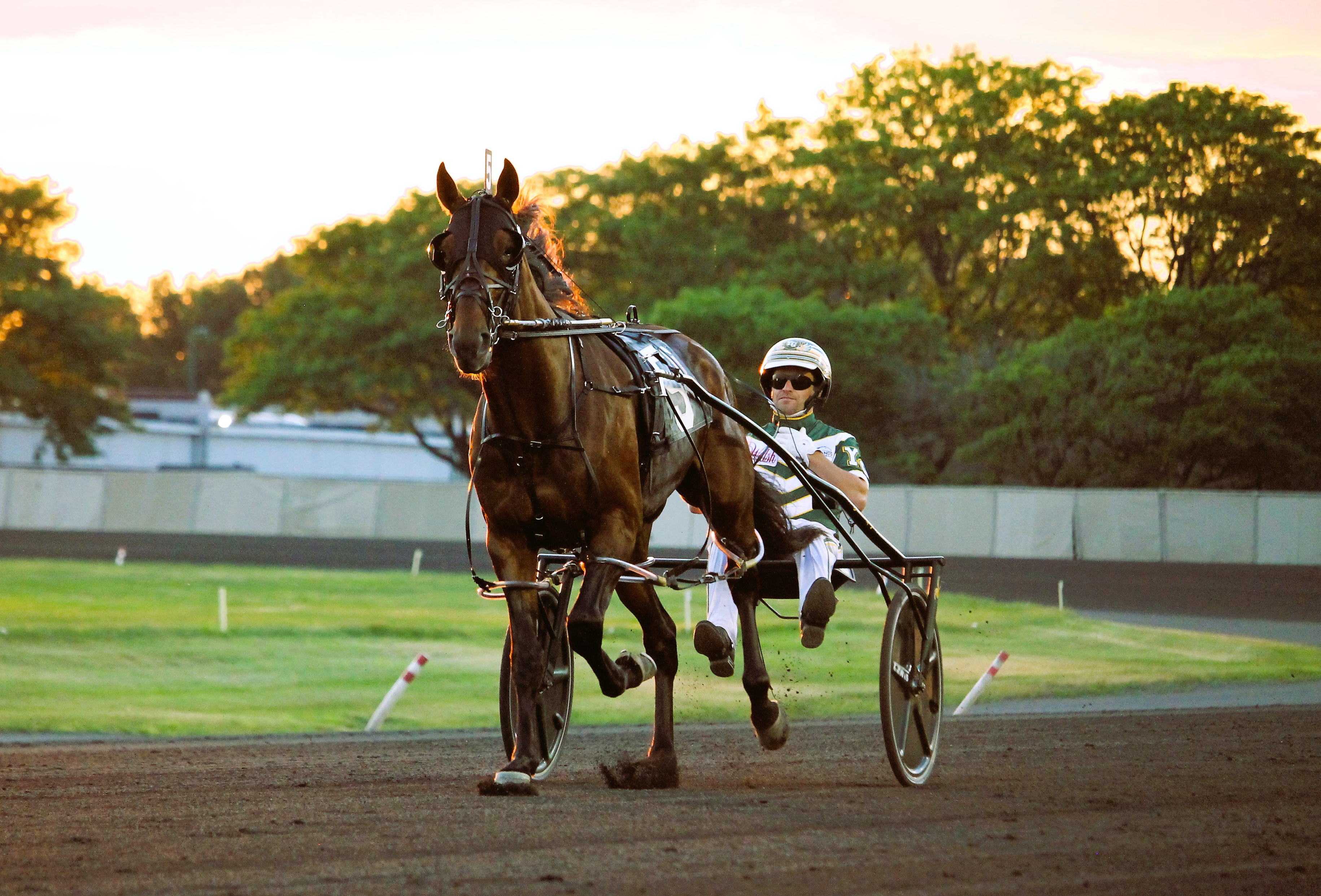
While some have criticized how today's catch-drivers conduct themselves during the first quarter of races, a real perspective to their overall talent has been lost. The July 16 Meadowlands program showcased the enormous skills of the sport's leading horses but simultaneously spotlighted the brilliance of those who have reached the pinnacle of success guiding them.
Perhaps lost in the moment in the victory of Beach Glass in the Meadowlands Pace was the driver change that took place in the bike prior to the North America Cup, which saw Paul MacDonell step aside and pave the way to a younger, if not more talented driver in Yannick Gingras to pilot the colt going forward. The recognition by MacDonell, or reality of the moment when the understanding that no matter how talented a horse is, a mistake or two by a driver can lead to losses as opposed to victories, paved the way for Gingras' arrival, and a more consistent and accomplished Beach Glass has been the result.
While some have cast Beach Glass' Meadowlands Pace victory as making up for his late sire's only career defeat, I for one will never really believe that Somebeachsomewhere's second-place finish in the 2008 Meadowlands Pace wasn't his greatest race or, for that matter, that the horse that beat him that day was breathing the same air on that occasion.
Yannick Gingras showed the calm and cool necessary to handle a top horse, and that has been apparent since he sat behind Beach Glass for the first time. The confidence has helped settle down Beach Glass, and in turn, the colt has performed better and better with each race.
Sometimes as bettors we focus on the horses that win races and instead miss driving accomplishments where horses thought to be complete outsiders manage to find the way on to the exacta or trifecta ticket surprisingly. Rarely is credit given to the driver who perfectly executes a strategy that gets a horse to finish second or third that may have been thought to be no better than eighth or ninth best in the field. Mad Max Hanover rallied sharply in the late stages to get the runner-up spot in the Meadowlands Pace, and that was no small task given the son of Always B Miki started from post nine in the field of 10. Mad Max Hanover had also landed outside in the North America Cup, and despite having the option to drive a horse with an inside post that night, Tetrick stayed with Mad Max Hanover in the Cup to an off-the-board finish.
In the Pace, Tetrick did not let the post position or speed of the race stop him from being assertive, and in the process, he managed to forge a spot on the outside behind cover, while Fourever Boy and Mike Wilder got pinned to the pylons moving past the quarter and leading to the half. It was a split-second decision by Tetrick that put him on the back of I Did It Myway and paved the way for a reasonable cover journey in a slowed-down middle-half. Mad Max Hanover had to perform well to complete the job, but that is exactly what he did, pacing home in 25 4/5 to be a clear second behind Beach Glass.
When watching the new world champion Bulldog Hanover, most recent observers would think that any driver could win with a horse of this incredible power. Prior to his arrival in East Rutherford, Bulldog Hanover had never had the string of successes he would find on four successive Saturdays. While trainer Noel Daley has considered his job to be "babysitting," it would be unfair not to give him credit for keeping Bulldog Hanover in great condition to accomplish what prior to now had been unthinkable. On the other side of the spectrum sits Dexter Dunn, who did not take the Haughton as a given and instead drove the race with the heavy favorite as perfectly as he could, while at the same time not getting stressed. One of Dunn's great qualities in the sulky is his innate sense of not hurrying at the start of a race. On Saturday with Bulldog Hanover, Dunn knew that Todd McCarthy was likely to be more assertive with Rockyroad Hanover from the outside post. Dunn didn't panic as if it was that important to be on the lead early. Instead, he allowed Rockyroad Hanover to loop him into the first turn and then patiently followed that one until he chose to take the lead with Bulldog Hanover. Keeping a horse of this caliber relaxed is a plus in any race, and it's that sense, to me, which led to the 1:45 4/5 mile. Bulldog Hanover was completely ready for the final-quarter sprint and Dunn did the rest to assure the milestone.
► Sign up for our FREE DRF Harness Digest Newsletter
It's also worth mentioning that driver Andy Miller had the right idea with the lightly-raced Max Contract to move to the outside and follow cover in the Mistletoe Shalee. Miller didn't panic or attempt to rush the Huntsville-sired filly in order to keep with cover on the final turn. Perhaps that kind of aggression could have led the filly into making a mistake. Miller remained calm until the stretch drive, and then Max Contract showed that wicked burst of speed, previously seen only in qualifying miles, to catapult by her rivals.
Last, but certainly not least, was the sharp steer that Brian Sears put on Joviality S in a division of the Del Miller Memorial for sophomore filly trotters. Sharp, I say, because he not only wanted to win the race, but at the same time preserve the Chapter Seven filly for future races. With Joviality S on the front end, Sears knew there was unlikely to be any serious middle-half activity. While the decision could have led to some anxious moments in the stretch when Venerable took a determined shot at her, Joviality S was well-equipped to finish off the mile in a personal-best.
It is dangerous in modern times to get overly concerned about the apparent closeness of Joviality S' victories, as some might consider her most recent effort. In any race that turns into a sprint nowadays, there is always the risk that a "fast" horse will beat a "better" one by being close enough and accelerating in the final eighth. When races are contested at a lively clip throughout all four quarters, it tends to eliminate such injustice.
The decision to point Joviality S towards the Hambletonian, as opposed to the Hambletonian Oaks, makes sense on numerous fronts. I see a host of talented trotting fillies that won't make winning the Oaks a walkover. The colts, other than Rebuff, have lacked any consistency, and to this point, lack the depth of the fillies. Perhaps behind Sears and trainer Marcus Melander's strategy has been preservation of Joviality S over the course of the first few months of racing. Final times are not always the greatest indicator, and to this sense, there's a feeling that for Joviality S the best is yet to come, especially if others in the field do some of the heavy lifting, and she's left with something to chase.