
Fonner forgoes out-of-state simulcasting to avoid HISA regulations
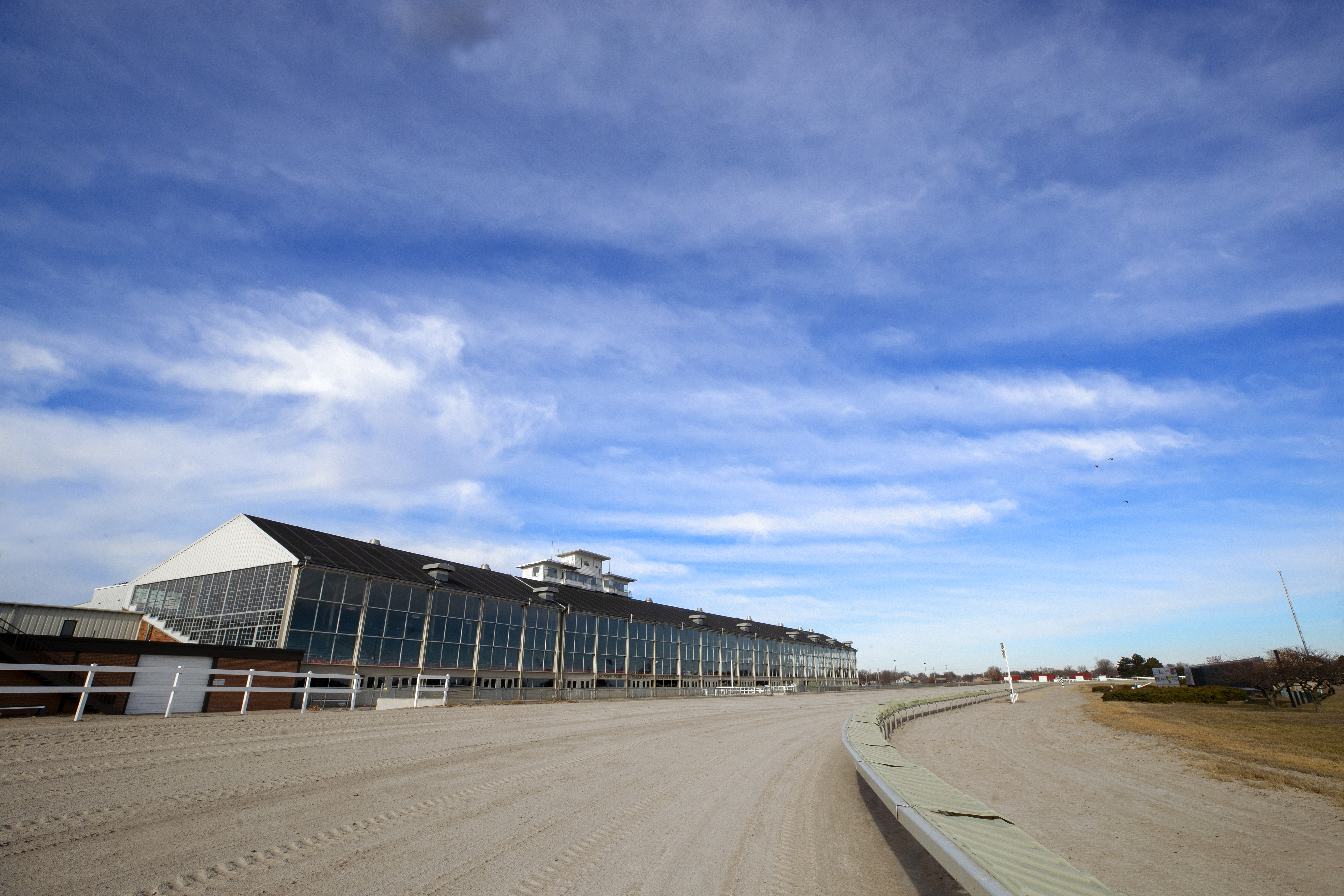
Fonner Park in Grand Island, Nebraska, which opened its 37-day live meet on Friday, has declined to send its signal to out-of-state sites to avoid regulation by the Horseracing Integrity and Safety Authority, track officials said Friday.
Fonner Park, which is owned by a non-profit county livestock association, made the decision as a “direct result of the complications with the federal implementation of HISA,” the track said in a press release. Chris Kotulak, the track’s chief executive officer, called HISA’s current batch of regulations “unreasonable and overreaching” in the release and said that the rules “presented demands and obstacles that a racetrack our size cannot achieve or endure.”
In a subsequent interview, Kotulak said that he was “neither for or against” HISA but that he made the decision to forego out-of-state simulcasting due to difficulty in complying with HISA rules and the opposition of horsemen and the state’s racing commission.
“The convolution and confusion was too much to deal with at this point,” Kotulak said.
Kotulak said that he had discussions with HISA on potential solutions in the past month but that those talks did not bear fruit.
In a statement provided in response to queries about the Fonner talks, HISA said that the discussions had taken place but that no solution was reached. The statement said that the unwillingness of the state’s racing commission to work with HISA played a factor in the situation.
“State racing commissions that enter into voluntary agreements with HISA and [HISA’s drug-enforcement unit] see significant cost savings and efficiencies that accrue to the benefit of all participants, including tracks,” the statement said. “However, when states do not enter an agreement, as is the case in Nebraska, the full compliance and implementation costs fall to the tracks.”
Fonner is the third track to have its simulcasting signal restricted due to the implementation of HISA’s racetrack safety rules last July 1. Last summer, the Texas Racing Commission declined to approve an out-of-state simulcasting contract for Lone Star Park at the advent of the HISA safety rules, also to escape jurisdiction by HISA. Lone Star’s handle dropped 90 percent after the decision.
:: Bet the races with a $200 First Deposit Match and FREE Formulator PPs! Join DRF Bets.
Earlier this year, the Texas Racing Commission also declined to approve simulcasting contracts for Sam Houston Race Park, but the commission reversed course after an appellate court in mid-January ruled that it would not re-hear a case in which it ruled HISA unconstitutional. However, Sam Houston declined to send its signal to out-of-state locations despite the approval, citing the need “to fully evaluate the many legal complexities surrounding recent court decisions.”
HISA’s federal enabling legislation, which was passed late in 2020 and amended late last year, gives HISA authority over any race that is made available for wagering over state lines.
Nebraska’s horsemen and its racing commission are a party to a lawsuit filed against HISA in a Louisiana District Court alleging constitutional deficiencies in the enabling legislation. That suit has yet to be decided, at the same time that several other suits involving HISA continue to wind their way through federal district and appellate courts.
Nebraska’s racing constituencies have been aggressive in pushing back against the implementation of HISA ever since the enabling legislation was passed. The groups have said that complying with HISA’s regulations would cost racetracks and the commission too much money, and they have said that they believe states should continue to regulate racing, as opposed to HISA’s federal approach.
Fonner Park and other racetracks in the state received approval last year from the state’s racing and gaming commission to open casinos, after voters approved amendments in 2020 giving racetracks monopoly power over the operation of casinos in the state. A temporary casino opened at Fonner in December. A $100 million casino built in partnership with the Iowa-based company Elite Casino Resorts is slated to open in 2025.
Nebraska’s other Thoroughbred track, Horsemen’s Park, is expected to open a temporary casino in March, in partnership with Caesar’s Entertainment. Operators retain 80 percent of the revenue from casinos, with the remainder used to fund property-tax cuts.
In 2020, Fonner Park reaped significant rewards when the state allowed the track to continue to race after the onset of the COVID-19 pandemic, at a time when nearly all other U.S. racetracks were shut down. The track shifted its live racing to a Monday-Wednesday schedule to take advantage of gaps on the weekly simulcast menu, and average handle per race at the track soared 1,265 percent, from $30,667 per race to $418,869 per race.
But the track returned to earth the next year, when the country began to emerge from pandemic restrictions and Fonner returned to a Friday-Sunday racing schedule. Kotulak said that the total amount of revenue received from out-of-state simulcasting during the track’s 37-day meet last year was $450,000, split evenly between the track and its horsemen.
“It would have cost me hundreds of thousands of dollars this year just to comply with the HISA regulations,” Kotulak said.
:: Want to learn more about handicapping and wagering? Check out DRF's Handicapping 101 and Wagering 101 pages.