

Elite juvenile Beyers often translate to older success
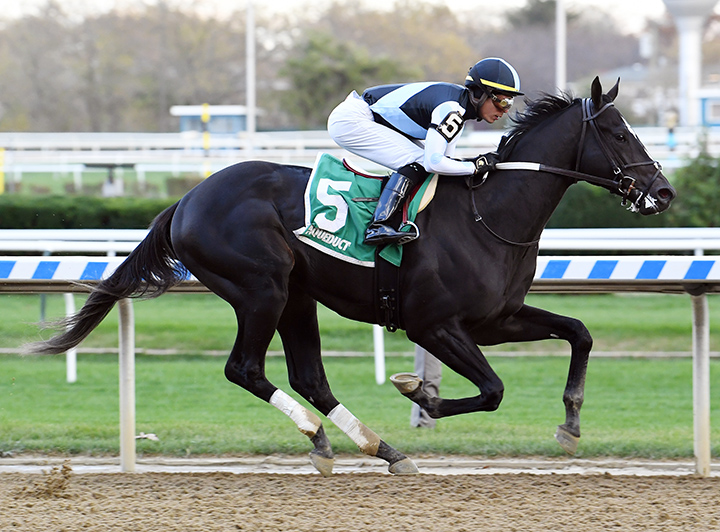
Q. I was wondering how much stock you put in 2-year-olds that come up with big Beyer Speed Figures and if they are as reliable to look at when handicapping them as 3-year-olds?
How much stock do you put into horses like Independence Hall with a 101 Beyer?
– Andrew Berofsky
A. My rule of thumb is that racehorses improve their figures at the rate of about one point per month as they mature, peaking after they turn 4. This is a rough guideline, of course. Some runners regress as they start tackling longer distances. But overall, racehorses might be expected to improve 10 to 20 points upon their 2-year-old form over the course of a career.
When horses earn outstanding figures as 2-year-olds they frequently go on to great success – on the racetrack and at stud. I would discount figures earned at 5 1/2 furlongs or less. Otherwise, exceptionally fast youngsters often become exceptionally fast 3- and 4-year-olds.
Since 2006, eight 2-year-olds have earned Beyer Speed Figures of 106 or higher in races at six furlongs or longer: Street Sense (2006), War Pass (2007), Sok Sok (2007), The Factor (2010), Uncle Mo (2010), Beholder (2012), Shared Belief (2013), and Daredevil (2014). That’s a pretty impressive list. Street Sense won the Kentucky Derby. Beholder was a four-time Eclipse Award winner. Uncle Mo earned a figure of 118 as a 3-year old and now stands for a $125,000 stud fee. Shared Belief won four Grade 1 stakes at 3 and 4. The lone fluke on the list was Sok Sok, who earned a figure of 109 in a six-furlong race at the Fair Grounds and amounted to nothing thereafter.
Independence Hall hasn’t run as fast at 2 as these horses, but he certainly has the potential to improve significantly. There was no doubt about the validity of his speed figure in the Nashua Stakes at Aqueduct, and he earned the 101 going a mile in only the second start of his career. He figures to be a top 3-year-old.
– Andrew Beyer
