

Del Mar goes from synthetic to 100 percent organic
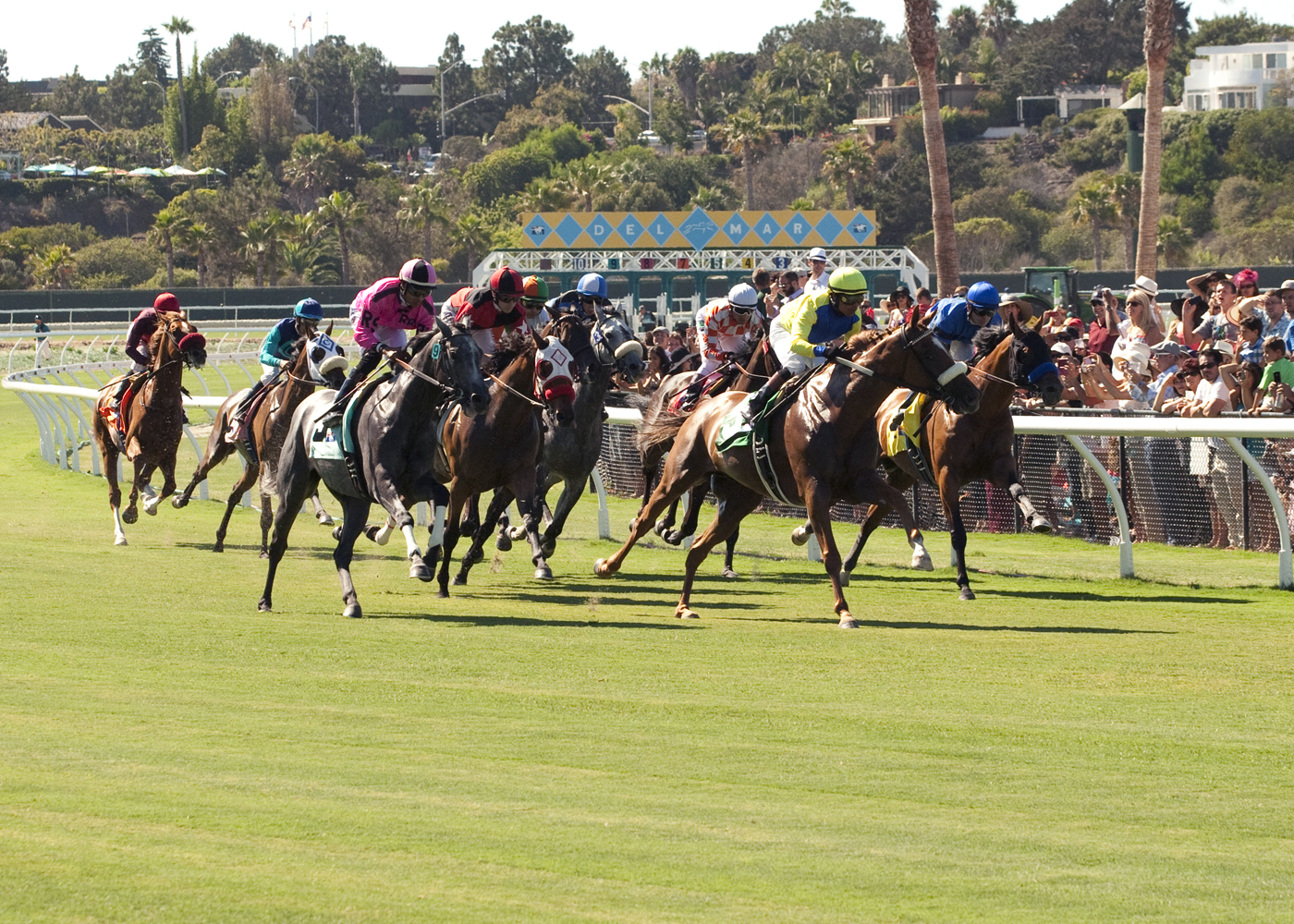
DEL MAR, Calif. – On the surface of things, there’s quite a few changes afoot – and underfoot – at Del Mar.
For the first time since 2006, this track will race on dirt, the controversial Polytrack era having ended after the fall meeting last November. And the infield turf course, newly installed prior to last summer’s meeting, has grown thicker and hardier.
So, Del Mar launches into this meet Thursday with management equal parts hoping and believing that both developments will result in the safest racing possible.
Last year’s summer meeting was severely impacted by catastrophic early season injuries that twice forced the suspension of grass racing. The irony, though, is that last fall’s meeting could not have been safer.
“I have no problem defending what we’re doing,” Joe Harper, Del Mar’s president and chief executive officer, said earlier this week. “We’re doing everything we can to make both surfaces as safe as possible.”
Let’s start with the dirt. Del Mar’s surface uses the same material, El Segundo sand, that was installed at Santa Anita when that surface was refurbished last year. It became available when land near Los Angeles International Airport was excavated; the dirt there was highly desired by both Santa Anita trackman Dennis Moore and Del Mar’s Richard Tedesco.
“Fortunately, there was enough material for everyone,” said Harper, who said having similar surfaces at Santa Anita and Del Mar – as well as a dirt track at Los Alamitos – gives the Southern California circuit a desired consistency.
“I think it’s important that we’re all on the same thing,” Harper said.
According to Harper, Moore was forthcoming with the learning curve he had with the surface at Santa Anita.
“He’s told us the way he thinks it’s best maintained,” Harper said.
In addition, Del Mar has utilized the advice of surface guru Mick Peterson, “who’s been working with us, utilizing his machinery to collect data, just like he does helping Santa Anita,” said Tom Robbins, Del Mar’s executive vice president of racing and industry relations.
Del Mar has the same schedule for renovation breaks each morning as was in place at Santa Anita. The track opens for training at 4:30 a.m., closes at 10, and there are three renovation breaks – at 6, 7:15, and 8:30.
Both Harper and Robbins admit, though, that the real test of the surface will come during the height of the season, when nearly 2,000 horses are training on it every day and there will be racing on it five afternoons per week. And there are certainly differences in maintaining a track near the ocean than one in the San Gabriel Valley.
“Santa Anita has more temperature extremes,” Robbins said.
So far, though, the main track has been embraced. It had a test run in May, when horses trained over the track prior to a 2-year-olds in training sale conducted by Barretts.
Peter Miller, who tied for the training title here last summer and won it outright last fall, said, “All the horses I bought at Barretts came out of it really well.”
“And I’m a big fan of Santa Anita’s racetrack,” Miller said. “I think this track looks great, like Santa Anita’s.”
Miller keeps most of his horses at San Luis Rey Downs, a training center 32 miles northeast of Del Mar. He said having dirt at Del Mar will cut down on the need to bring his horses in early from San Luis Rey to gallop over the surface for several days prior to a race, something he said was paramount when competing on Polytrack.
Keith Desormeaux is one of many trainers who said the switch to dirt is “a positive for us.”
“We buy [horses] for dirt racing,” he said.
Handicappers also may appreciate the change, as Polytrack often proved frustrating for bettors because of the seeming randomness of some results. Many trainers also found the surface perplexing in terms of knowing how well prepared a horse was for a race.
“You’d have horses work well in the morning and then in the afternoon the track would get hot and you wouldn’t know how you’d do,” said Bob Baffert, who has won seven titles at Del Mar but none during the Polytrack era.
As for the turf course, Robbins said, “This grass is longer, it’s got more density this year, it’s more mature.”
Injuries suffered on the course last summer caused Harper to order the temporary suspension of grass racing, though jockeys at the time said there was nothing wrong with the course. Public perception, though, forced Harper’s hand. The second half of that meet, and entire fall meet, both were run without incident.
“The roots are more than twice as long as they were last summer, and it’s thick and springy,” Harper said. “It’s pretty tough grass.”