
Breeders’ Cup Marathon: Experience going long is key
In its five years of existence, the Breeders’ Cup Marathon has been something of a catch-all for horses who didn’t quite fit the bill for the other championship races and for connections who wanted to test their horses at long-distance racing for a generous purse.
As such, the list of Marathon winners is a diverse group in terms of places of origin, pedigrees, and prestige.
However, one of the few common bonds that links the Marathon winners is experience at longer distances, especially in the starts leading up to the Breeders’ Cup. Below are a few facts to consider when determining whether a horse is cut out for what likely will be the longest race of his life.
Of the five horses to win the Breeders’ Cup Marathon, four entered off a race of 1 1/4 miles or longer. The lone exception was Afleet Again, who went into the 2011 Marathon off a runner-up finish in a 1 1/16-mile optional-claiming race at Monmouth Park.
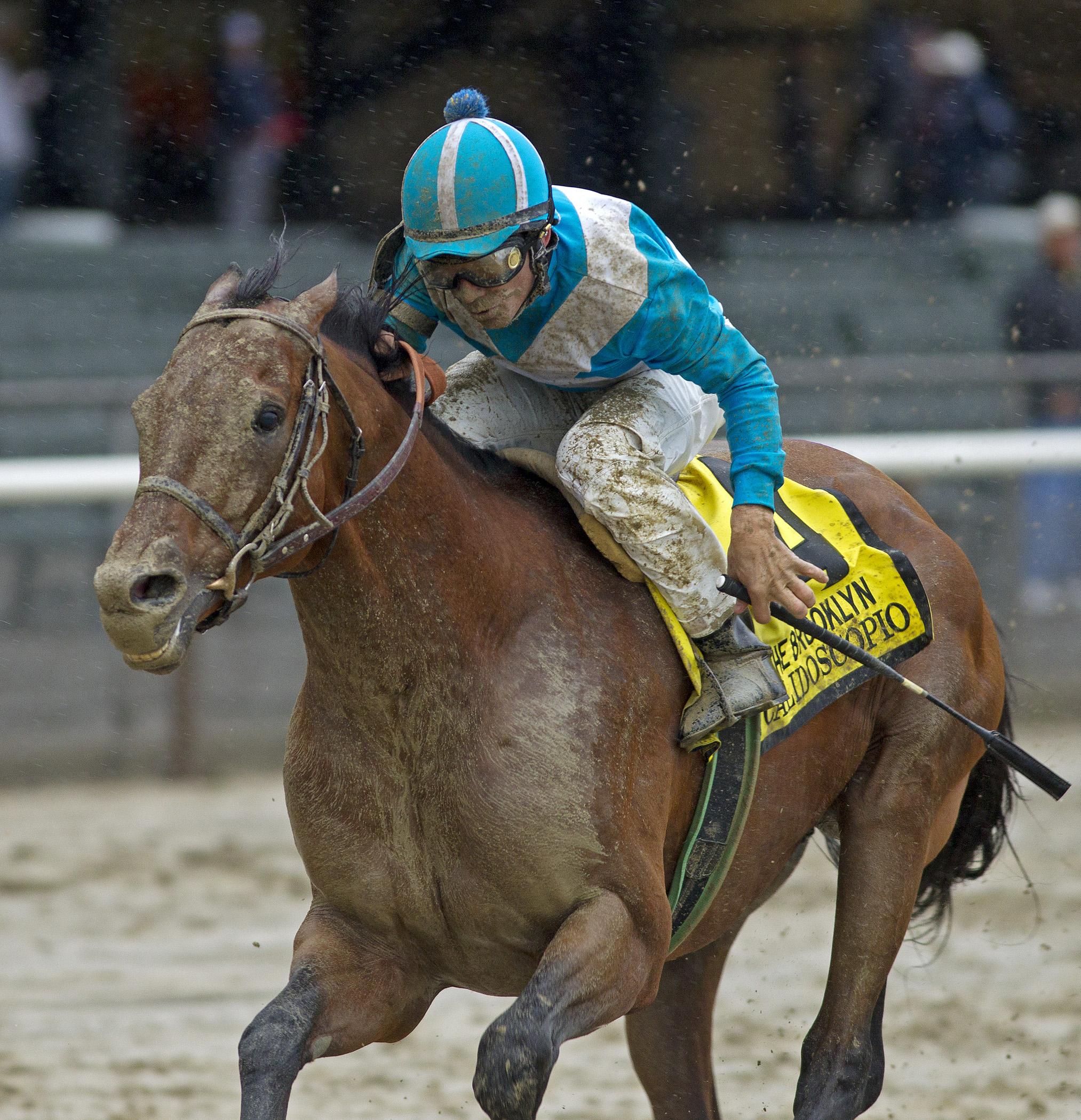
The average Marathon winner had 6.8 starts during his Breeders’ Cup-winning campaign prior to the race, led by 2010 winner Eldaafer, who raced nine times. Calidoscopio was lightly raced by comparison, with just three starts in 2012 before his upset victory in the Marathon.
Calidoscopio led all Marathon victors by average racing distance and average winning distance in their Breeders’ Cup-winning year at 11.43 furlongs and 12.18 furlongs. Man of Iron, who won the race in 2009, had the shortest average racing distance at 1 1/8 miles.
The average racing distance of a Marathon winner in his campaign leading up to the race is 9.89 furlongs, or just under 1 1/4 miles.
Three of the five Marathon winners came into the race off victories, but two Marathon winners had not won at all that year prior to the Breeders’ Cup – Muhannak and Afleet Again. Both raced at least once following their Marathon victory, and neither won again.
When considering running styles, it is worth noting that no horse has wired the Marathon field. In fact, the earliest a Marathon winner has assumed the lead was Muhannak in 2008, who held a half-length advantage after 1 1/4 miles and was nearly closed upon by Church Service before prevailing by a head.
Horses who were on the lead after a mile have had an average finish position of seventh, with three finishing last overall or last among the horses who were not eased.
Through five renewals of the Marathon, three winners did not hold the lead at any point of call until the finish, and one more reached the front during the stretch call. If history holds true, a horse with the ability to bide his time in the early going and get good position coming into the final turn will have an opportunity to succeed at Santa Anita.
In regard to breeding, two winners each have come from the Mr. Prospector or Northern Dancer sire lines, with the fifth stemming from Bold Ruler. On the broodmare side, three Marathon winners were out of mares by Nearctic-line sires.