

Breeders' Cup board votes to keep 2019 event at Santa Anita
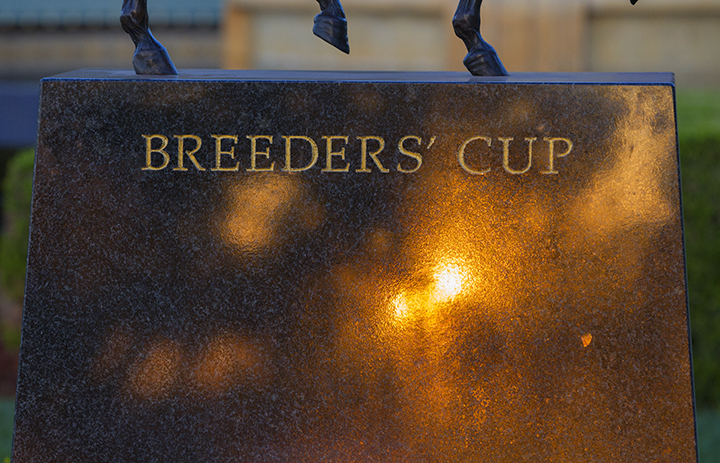
LEXINGTON, Ky. – The Breeders’ Cup board on Thursday decided to keep the organization’s two-day event this fall at Santa Anita Park in Southern California, despite the controversy that has enveloped the track for the past four months due to criticism over a spate of horse deaths at the facility.
The decision by the board, during a regularly scheduled meeting in Lexington, Ky., underlines the organization’s commitment to Santa Anita as a host venue – the track has hosted the event six times since 2008, more than any other location – while also opening the event up to the possibility of large-scale protests and a level of scrutiny that may have been partially avoided had the event been moved. The deaths drew nationwide attention and particular scrutiny from California animal-welfare and animal-rights organizations, along with calls for change from some of the state’s most prominent politicians.
In a statement, Breeders’ Cup said that the board “affirmed by unanimous decision” the choice to remain at Santa Anita, which has hosted the event nine times since the Breeders’ Cup was first held in 1984. Breeders’ Cup President and Chief Executive Officer Craig Fravel noted in the statement that Santa Anita has put in place various reforms as part of its effort to reduce catastrophic injuries at the track, though the efficacy of those reforms is not yet clear.
“We fully embrace these reforms and will devote our time and energy in the coming months to further advance those efforts,” Fravel said. “We look forward to showing the world the best in Thoroughbred racing at one of its finest venues.”
This week, Gov. Gavin Newsom of California signed a bill that allows the state’s horseracing regulatory agency, the California Horse Racing Board, to suspend racing at any racetrack in the state unilaterally “for issues related to track safety.” Santa Anita is scheduled to begin its fall meet on Sept. 27, and if fatalities again become an issue in the lead-up to the Breeders’ Cup, the CHRB could be forced to act by political forces more powerful than itself, which could put the event in jeopardy.
However, Fravel, in an interview after the board meeting, said that Breeders’ Cup believes that the CHRB would only issue the stop order “with great caution,” noting the steps undertaken by Santa Anita and the agency itself to put in place safeguards for training and racing. Breeders’ Cup also implements its own security and safety protocols for its event, including out-of-competition testing and rigorous veterinary examinations.
“We don’t think it would be a knee-jerk reaction,” he said.
Fravel also said that Breeders’ Cup has a “back-up plan” should such an order come from the CHRB, but he said he was “not going to discuss the specifics of what those plans are.”
While Breeders’ Cup officials had refused to confirm that the organization was considering a change in venue for this year’s event, scheduled for Nov. 1-2, speculation about possible alternatives centered on Churchill Downs in Louisville, largely due to that track’s prior experience as a host and its expertise in accommodating big events. Churchill Downs hosts the Kentucky Derby and the Kentucky Oaks each year, two events that draw crowds in excess of 100,000 to the track, well exceeding the typical attendance for either of the two Breeders’ Cup live race days. The track hosted the Breeders’ Cup last year, and in 2010 and 2011.
Breeders’ Cup had already begun selling tickets to the Santa Anita event at the time that the board met on Thursday, and its website is currently offering merchandise for sale that is branded with the Santa Anita logo and adorned with Southern California themes. Santa Anita officials and the state’s dominant horsemen’s group, the Thoroughbred Owners of California, had also urged the organization to stick to its plan.
Although Breeders’ Cup and its host tracks do not release figures on how much revenue the host track receives from the event, officials with knowledge of the organization’s finances said this week that the event can generate several millions dollars for the host. Santa Anita likely suffered millions in lost revenue and additional expenses this year due to lost racing days and the cost associated with the measures implemented in response to the crisis.
Pressure on the track has been led by People for the Ethical Treatment of Animals, the animal-rights organization that sponsors intense public awareness campaigns drawing attention to its causes. At various points during the meet this year, the track was asked to close down by the state’s horseracing regulatory agency and Sen. Dianne Feinstein. PETA has vowed to organize protests of the track during the Breeders’ Cup, in addition to the protests it led throughout the meet.
Southern California racing constituencies have focused in recent months on the steps the track has taken to address the spate of deaths – a total of 30, including both racing and training fatalities, since the meet opened last year on Dec. 26. Those measures include more restrictive medication policies and the creation of a five-person veterinary examination panel that evaluated all horses for soundness and risk factors prior to the horses being allowed to race. The meet closed on Sunday, but officials have said those measures will remain in place for the meet starting Sept. 27.
Still, despite those steps, which were implemented in stages over the past three months, horses continued to sustain fatal breakdowns while either racing or training. During the track’s final weekend of racing, a horse trained by Jerry Hollendorfer was catastrophically injured while training, leading to a ban of undetermined length of the Hall of Fame trainer at both Santa Anita and Golden Gate Fields. The ban was issued by The Stronach Group, which owns both tracks.
Fravel said that Breeders’ Cup will control the rules of entry for horses in its event, as is typical for all events held in the past, and he said that the organization has not yet made a decision on whether Hollendorfer would be allowed to enter any horses in its races.
“We aren’t going to pre-judge any entries until we know the circumstances prevailing at the time,” Fravel said.