

Beyer: Pedigrees fail to pass the 'Test'
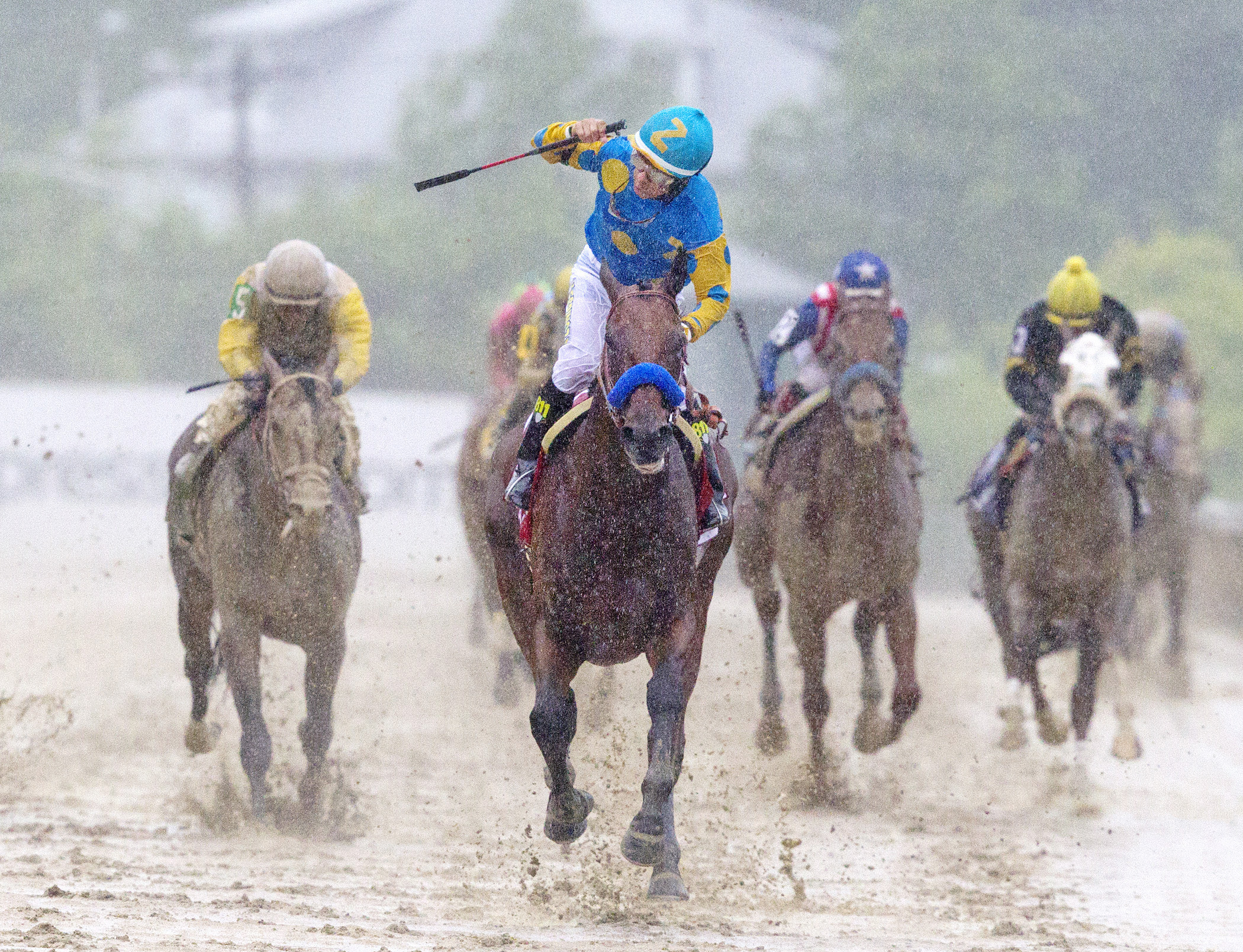
When American Pharoah seeks to complete a sweep of the Triple Crown at Belmont Park Saturday, racing fans will hope to see a great race and perhaps a definitive confirmation that the winner has earned a lofty place in the sport’s history.
Based on recent history, it won’t happen. Once billed as the “Test of the Champion,” the Belmont Stakes in recent years has produced so many bizarre, fluky outcomes that it is difficult to discern what Thoroughbred qualities the race is testing. Since 2000, its winners have included such improbable longshots as Commendable ($39.60), Sarava ($142.50), Da’ Tara ($79), and Ruler On Ice ($51.50), none of whom was distinguished before the Belmont and none of whom ever captured a stakes race after it.
The quality of horses’ performances in recent runnings of the Belmont, as measured by their winning times, has been dismal. This is the event that produced what may have been the greatest Thoroughbred performance of all time, Secretariat’s victory in 1973, when he ran 1 ½ miles in 2:24, a North American dirt record that still stands. From that year through 2009, only two Belmonts were run slower than 2:30. But in four of the last five years, the winning time for the race has been 2:30.42 or worse. Speed figures – which take into account the speed of the surface over which horses compete – confirm that the last seven editions of the Belmont Stakes have been significantly slower than the historical norm.
What has happened to the 146-year-old race? Its decline is the result of trends in the sport that span decades.
In the post-war years, U.S. breeders imported outstanding European stallions such as Nasrullah and Princequillo whose pedigrees were infused with stamina and who put their stamp on the American Thoroughbred. The great horses of the 1960s and 1970s – such as Kelso, Forego, Damascus, Secretariat, and Affirmed – were almost all great performers at 1 ½ miles or farther.
During this era the best American bloodstock was controlled by wealthy individuals and families who bred and raced their own horses. (Such operations owned nine of the 11 Triple Crown winners.) But as the influence of the dynasties faded, more top racing prospects were sold at auction instead of being campaigned by their breeders.
At these sales, overseas buyers began to acquire the best of U.S. Thoroughbred bloodlines, which proceeded to dominate the 1 ½-mile Epsom Derby for years to come. (The last 16 winners of the Epsom Derby are all descendants of Kentucky Derby winner Northern Dancer.) At the same time, a new breed of American buyer came into the marketplace with different aims. Pedigree expert Bill Oppenheim said: “Many of the buyers in the commercial auction market had financial pressures that the patricians didn’t have, meaning they wanted quicker returns on their investment. It wasn’t particularly conscious, but it happened.”
Instead of waiting for a potential long-distance runner to mature, buyers sought a horse who would be fast and precocious, enabling them to generate that quick return. Breeders saw that buyers wanted pedigrees infused with speed, and so they began to de-emphasize stamina when they planned matings. Success at 1 ½ miles was often perceived as a negative factor for a potential stallion because it implied that he was not a horse with speed. (This prejudice does not apply to sires of distance-running turf horses, such as Kitten’s Joy and Dynaformer, but only a rare stamina-oriented sire of dirt horses can make his mark as did the 1992 Belmont winner, A.P. Indy.)
Birdstone, the 2004 Belmont Stakes winner, illustrates the workings of the marketplace. At stud he has sired a Belmont winner, Summer Bird, as well as a Kentucky Derby winner, Mine That Bird. Yet he is an unfashionable stallion, standing now for a paltry $5,000 fee at Gainesway Farm. “People have the memory of him coming from far back in the Belmont, and the commercial market is more focused on speed,” said Gainesway’s director of sales Michael Hernon.
At least Birdstone was able to remain in Kentucky; other Belmont winners have been exiled to locales such as Venezuela, South Korea, and Turkey.
With fewer horses bred to run long distances, racetracks have de-emphasized tests of stamina on the dirt. New York’s most important race for older horses, the Jockey Club Gold Cup, contested at two miles for more than a half-century, was shortened to 1 ½ miles and shortened again to its present distance of 1 ¼ miles. The Belmont Stakes is the only remaining Grade 1 dirt race at 1 ½ miles in the U.S.
So there is no reason for an American breeder to mate a sire and dam with the aim of producing a horse to run 12 furlongs on the dirt. Almost every pedigree gets a significant infusion of speed – as in the case of American Pharoah. He inherits stamina from his sire and especially from his grandsire, Empire Maker, a Belmont Stakes winner and an influential stallion. But his dam, Littleprincessemma, contributes no stamina to the pedigree; her sire, dam, and siblings were quick sprinters.
Littleprincessemma’s genes aren’t going to help American Pharaoh on Saturday. Like his rivals at Belmont Park, his pedigree is ill-suited to the anachronistic distances of 1 ½ miles on dirt. That’s why the Belmont Stakes has become such an unpredictable race – even when the field includes a superior talent trying to win the Triple Crown.