

Belmont Park turf courses producing fast times
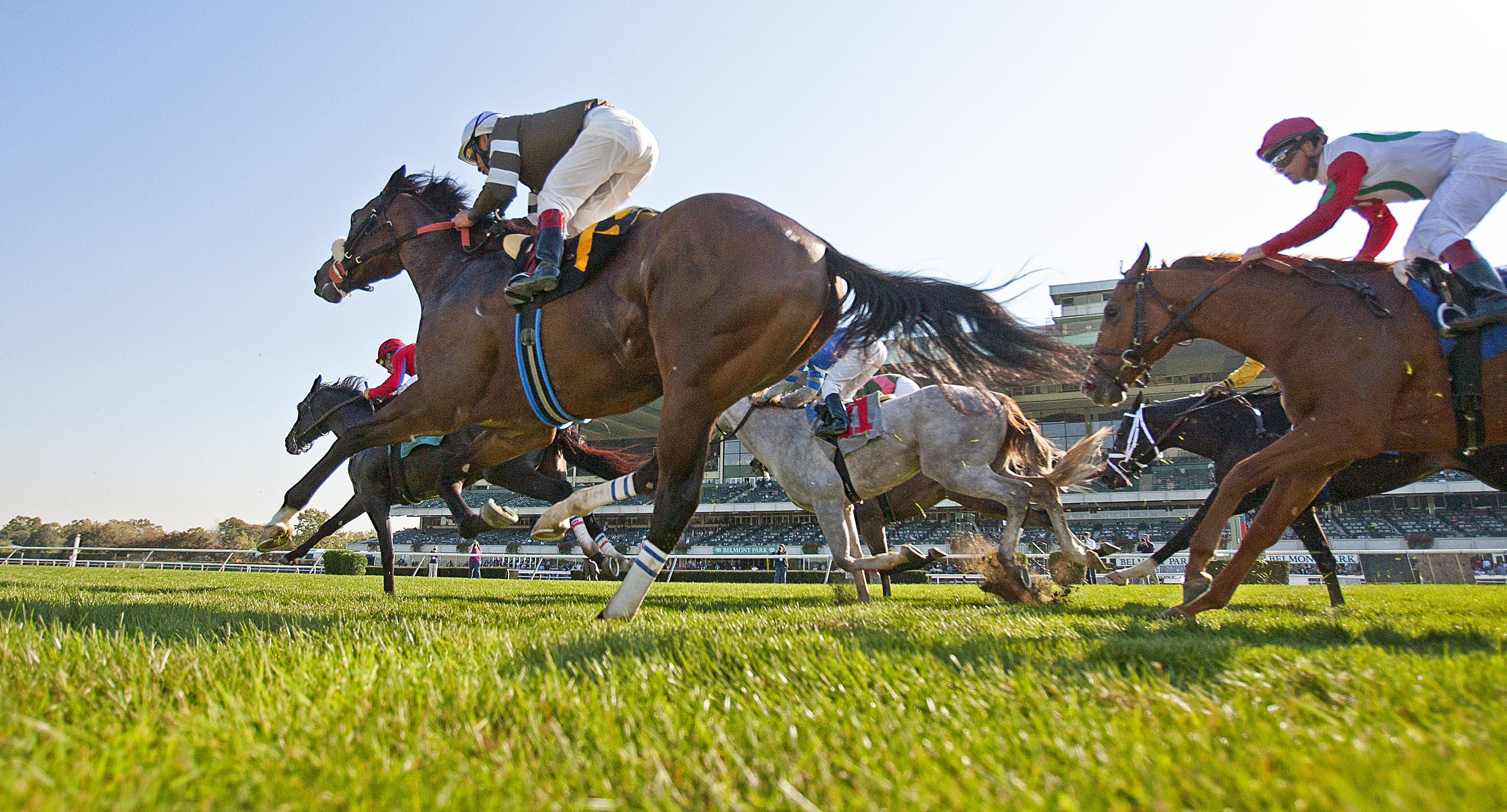
ELMONT, N.Y. – Observers will look at the times of the races being run on Belmont Park’s turf courses this meet and conclude that it is like running on a paved road. In actuality, there are several factors playing a role in the course producing so many fast final times.
First, the courses are being cut more frequently and are anywhere from a half-inch to three-quarters of an inch shorter than in years past.
“It certainly does dry out a little bit quicker, but it is healthier for the grass being shorter than the old wives’ tale of having eight or 10 inches of long grass and saying it saves the roots and protects it,” said Glen Kozak, vice president of racing surfaces and facilities for the New York Racing Association.
Kozak said the relatively mild and dry weather that has been prevalent in New York going back to last fall may also play a role in keeping the courses tighter.
“Historically, when we come over from Aqueduct, you usually have a rainy spring, and we’re watching the damage done to the course,” Kozak said. “This year, we’ve been fortunate where the weather pattern has played out where we haven’t had as much rain.”
On Monday, Kozak said, 1.65 inches of rain fell at Belmont. Three of the five scheduled turf races were moved to the main track. Two stakes for New York-breds were run on the Widener turf course, and the times for both were solid.
Lastly, the irrigation system is now computerized, meaning areas that may need more water can get it without having to water all parts of the courses, Kozak said.
So far this meet, the inner turf course record for 1 1/16 miles has been lowered twice, and a 2-year-old filly set a Widener turf-course record for five furlongs. There have been several six-furlong turf races run in under 1:08 and many seven-furlong turf races in under 1:21.
Kozak said he has spoken with many jockeys and trainers, but he has yet to hear any concerns regarding safety issues.
“It is a little bit quicker than I’d like it, but again, I think the course is probably in the best shape it’s been in,” Kozak said. “We went into the fall last year in good shape, and the recovery through the wintertime was very good.”