

Baffert attorney claims Medina Spirit test is consistent with skin ointment
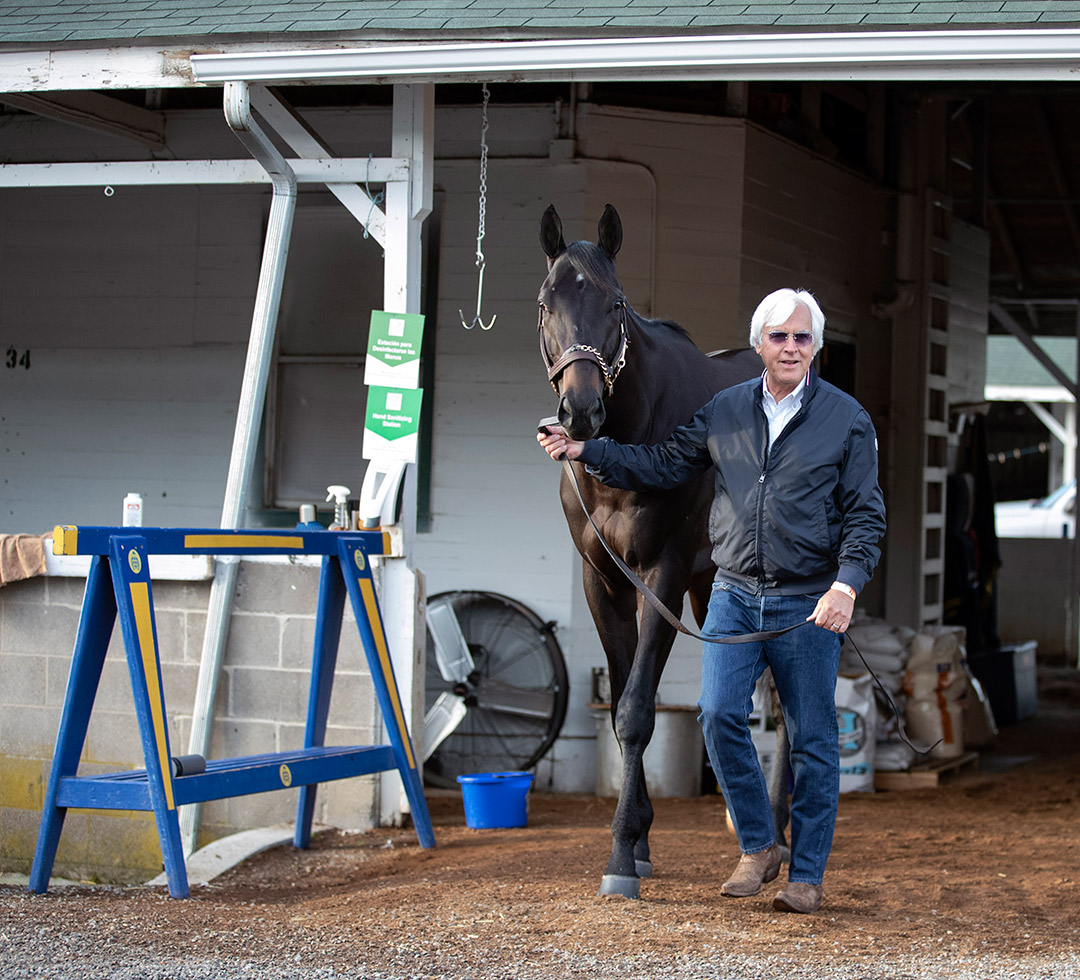
The attorney for Bob Baffert said in a statement released late Friday that elements in the urine analysis of Kentucky Derby winner Medina Spirit conformed with the administration of the drug betamethasone in a skin ointment, solidifying a line of argument Baffert’s defense will use when attempting to get the positive thrown out.
Craig Robertson, the attorney, said in the statement that the urine analysis did not turn up the presence of betamethasone acetate, which is found when betamethasone, a potent corticosteroid, is administered as an intra-articular injection. Most rules regarding the administration of corticosteroids have been drafted to regulate intra-articular administration of the drugs, which are used to treat inflammation and can have painkilling effects that interfere with veterinary analyses of soundness.
Medina Spirit, owned by Zedan Racing Stables, tested positive for betamethasone after winning the Derby. It was Baffert’s record seventh Derby win. The horse has since gone on to win another Grade 1 stakes and finished second in the Breeders’ Cup Classic on Nov. 6.
Baffert and his lawyers have contended that the post-Derby positive was due to an ointment used on Medina Spirit to treat a skin condition in the lead-up to the race, and that contention will form the basis of an argument that regulations on the intra-articular use of the drug do not apply to the case, his statement said.
“The Kentucky Racing Commission has steadfastly enacted rules relating to corticosteroid joint injection and have drawn a bright line rule that no injections are permitted within 14 days of a race,” the statement from Robertson said. “Now there is zero doubt that the 14-day rule some thought might have been violated by the earlier less specific testing is revealed as premature judgment.”
As in most racing jurisdictions, trainers in Kentucky are held responsible for post-race drug findings under the “absolute insurer rule,” a once steadfast legal doctrine that has been weakened considerably in state courts over the past decade. Robertson was successful earlier this year in arguing that two drug violations in Baffert horses in May of last year in Arkansas were the result of accidental contamination, and he had the trainer’s suspensions for those violations thrown out by the state racing commission.
While the post-race Derby positive for Medina Spirit has been common knowledge since a week after the Derby this year, testing on the split sample of the horse’s urine and blood has been complicated by legal fights and Baffert’s intention to test the sample for the presence of betamethasone acetate. The lab director that tested the split sample in New York has said that the testing for the specific substance required the establishment of a new reference standard.
Medina Spirit faces disqualification for the Derby positive. The return of the split-sample analysis will likely lead to the case moving forward at the commission level. A hearing has not yet been scheduled.