

Army Mule kicks up his heels in first yearling sale
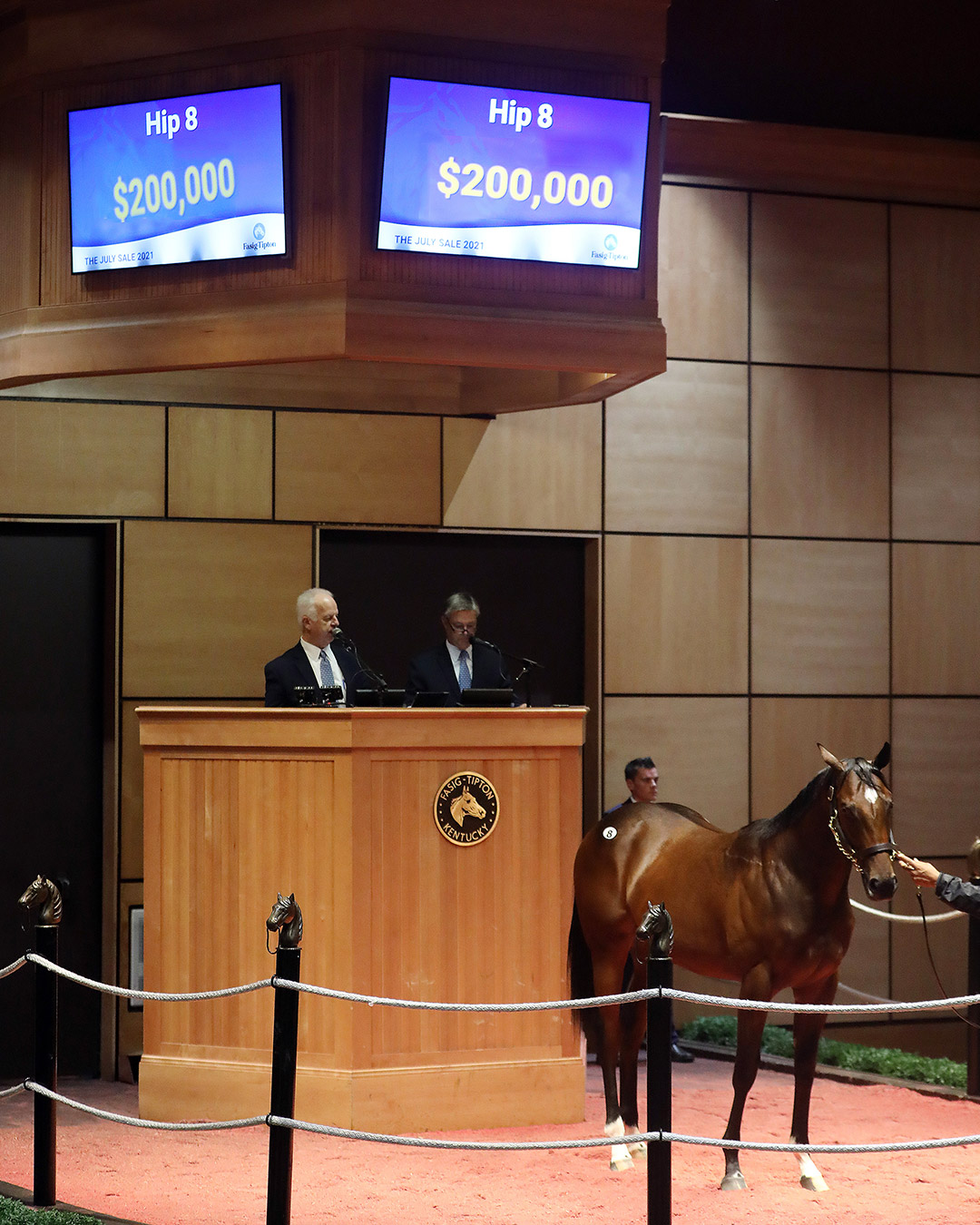
The brilliant but lightly raced Army Mule has made a fine start to his stud career with a well-received first crop in the commercial arena. That was most recently highlighted when a colt sold for $200,000 at the Fasig-Tipton Kentucky July yearling sale to rank as one of the best prices for a first-crop sire in the market kickoff event.
Army Mule, who stands at Hill ‘n’ Dale Farm, was represented by 12 weanlings sold in 2020 for an average price of $49,083, more than four times his introductory stud fee of $10,000. At the Fasig-Tipton July sale, he was represented by four yearlings sold for an average of $113,750. That quartet was led by a Florida-bred colt sold for $200,000 as the seventh horse through the ring on the day, while the market was still establishing momentum, to WinStar Farm’s Maverick Racing. The colt tied with colts by Girvin and Mor Spirit for the third-highest price for a first-crop yearling sire. A City of Light filly sold for $230,000, with a Justify filly sold for $210,000.
Army Mule, who was campaigned by St. Elias Stable, won his debut by 8 1/2 lengths in April 2017 at Belmont Park, but a knee injury paused his promising campaign. He returned to win an allowance-level event by 7 1/2 lengths in January 2018 at Gulfstream Park, then won the Grade 1 Carter Handicap that April, rolling by 6 1/4 lengths at Aqueduct. Army Mule was being pointed to the Grade 1 Metropolitan Handicap in June at Belmont, but another issue developed and he was ultimately sent for a break on a farm in Ocala. He returned to the work tab that September and logged four breezes before his retirement was announced.
Pennsylvania-bred Army Mule is by Friesan Fire. That successful Maryland sire is a multiple graded stakes-winning son of A.P. Indy out of Australian Group 1 winner Bollinger.
“A little unorthodox in that he’s by Friesan Fire,” Hill ‘n’ Dale’s John Sikura said. “Some people have wondered about that, but Friesan Fire is by A.P. Indy, his dam is by Dehere. There is some internationalism about it. A bit eclectic a pedigree, but he’s certainly well-bred enough to be a really good horse.”
According to The Jockey Club’s Report of Mares Bred, Army Mule covered 140 mares in his first season at stud. He saw a market-typical drop in his second season, to 47 mares, but Sikura said the quality of the young stallion’s first foals drove the figure right back up.
“We’ve supported him, St. Elias has supported him,” Sikura said. “He bred 93 mares this year in his third crop, which is highly unusual for a horse to breed nearly as many in his third crop as his first crop. We’ve had a lot of good comments – people like the foals.”