

2022 Kentucky Derby: Positional speed has been recent formula for success
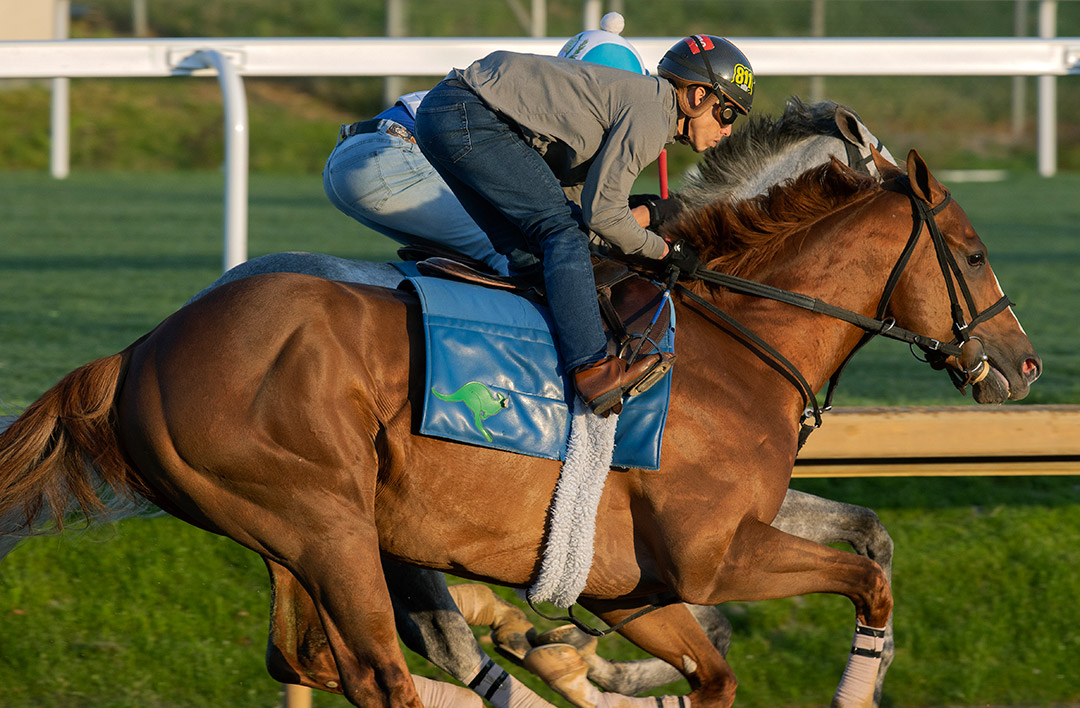
Classic Causeway was in the Kentucky Derby, then out, and now back in. While the decision on Monday to go ahead and run in the Derby on May 7 at Churchill Downs despite a belly flop in his final prep, the Florida Derby, can be debated right up until post time, if not beyond, the significance of his addition cannot be overstated in terms of how he impacts the pace.
And over the past decade, the pace of the Derby, most notably where horses are in relation to that pace, has proven to be one of race’s most significant handicapping factors.
Classic Causeway broke sharply from the gate in his wins in the Sam F. Davis and the Tampa Bay Derby, and he did so as well in the Florida Derby, though that day it mattered not, because he was done before reaching the far turn. He retreated to finish last in the 11-horse field, more than 21 lengths behind the victorious White Abarrio, in his lone try at 1 1/8 miles after four straight races at 1 1/16 miles.
Classic Causeway figures to be on or near the lead in the Derby. So too would be Early Voting, the Wood Memorial runner-up, though he’s not certain for the race, with trainer Chad Brown saying he could wait until the weekend to decide whether to run in the Derby or await the second leg of the Triple Crown, the Preakness at Pimlico on May 21. If he comes out, that would let in Pioneer of Medina, who is currently 21st on the points list, and who usually races near the lead, though not on it.

But there are plenty of others who prefer to be forwardly placed. Summer Is Tomorrow figures to be prominent, as well as Epicenter and Messier, with Charge It, Simplification, Taiba, and Zozos in close pursuit.
Based on the results of recent Derbies, the early scrum for position will be paramount, according to a study by Dick Jerardi, the Eclipse Award-winning former turf writer for the Philadelphia Daily News and a member of Beyer and Associates, which produces the Beyer Speed Figures in Daily Racing Form.
Since Churchill Downs switched to a points system for the 2013 Derby, the first-place finisher on Derby Day has been worse than third a quarter-mile into the race just once, when Orb rallied from 16th in 2013. Over the past six years, the first-place finisher was no worse than second, and the last three to cross the wire first – Maximum Security, Authentic, and Medina Spirit – all led with one lap to go in the 1 1/4-mile race.
The first-place finisher in those nine races was, on average, placed 3.44 – between third and fourth – a quarter-mile into the race. But if Orb is considered an outlier, the most-recent eight to finish first finds them, on average, placed 1.88 after coming past the finish post the first time.
Compare that to the 23 years before the points system was enacted, from 1990 to 2012, when earnings in graded stakes was the criteria.
In those races, Jerardi found, the average position of the winner a quarter-mile into the race was 9.5, somewhere between ninth and 10th. Only two of those 23 were first or second a quarter-mile into the race – Go for Gin, who in 1994 was second with a mile to go, and War Emblem, who led from start to finish in his upset victory in 2002.
In 11 instances – nearly half those 23 races – the winner rallied from 11th place or worse.
The points system rewards current form, with the value of the preps increasing as Derby Day draws closer. It has largely excised horses who, under the earnings system, amassed a huge bankroll in shorter races at age 2 or early in their 3-year-old year.
That certainly has impacted the pace of recent Derbies. But it can’t be the sole reason, witness the meltdown when Orb won.
Over the years, there often has been an overcorrection to the Derby pace based on what transpired the previous year or two. For instance, War Emblem pulled off his upset by going the opening half in 47.04 seconds, with riders seemingly still cognizant of the scorching 2001 pace of 44.86 seconds – a Derby record – that set the race up for Monarchos. Smarty Jones in 2004 stalked an opening half of 46.73 seconds. The following year, the overcorrection resulted in the opening half going in 45.38 seconds, setting the stage for Giacomo’s 50-1 upset.
Medina Spirit went the opening half in 46.70 seconds, Authentic in 46.41. If horses go faster than that in the Derby, it’s often too fast. Yet with positional speed so important now, the high-wire act for a jockey may be getting to a prominent spot without going too fast. That’s been the sweet spot in recent years.
But Orb’s race serves as a reminder that, even under the current system, if too many are too keen, a late runner can prevail. That’s what makes this Derby so fascinating, because there are quality horses who will be forwardly placed, and quality horses – like current Derby Watch favorite Zandon – who will be flying late if the front-runners go too fast, too soon.