
Rain doesn't dampen Kentucky Derby wagering
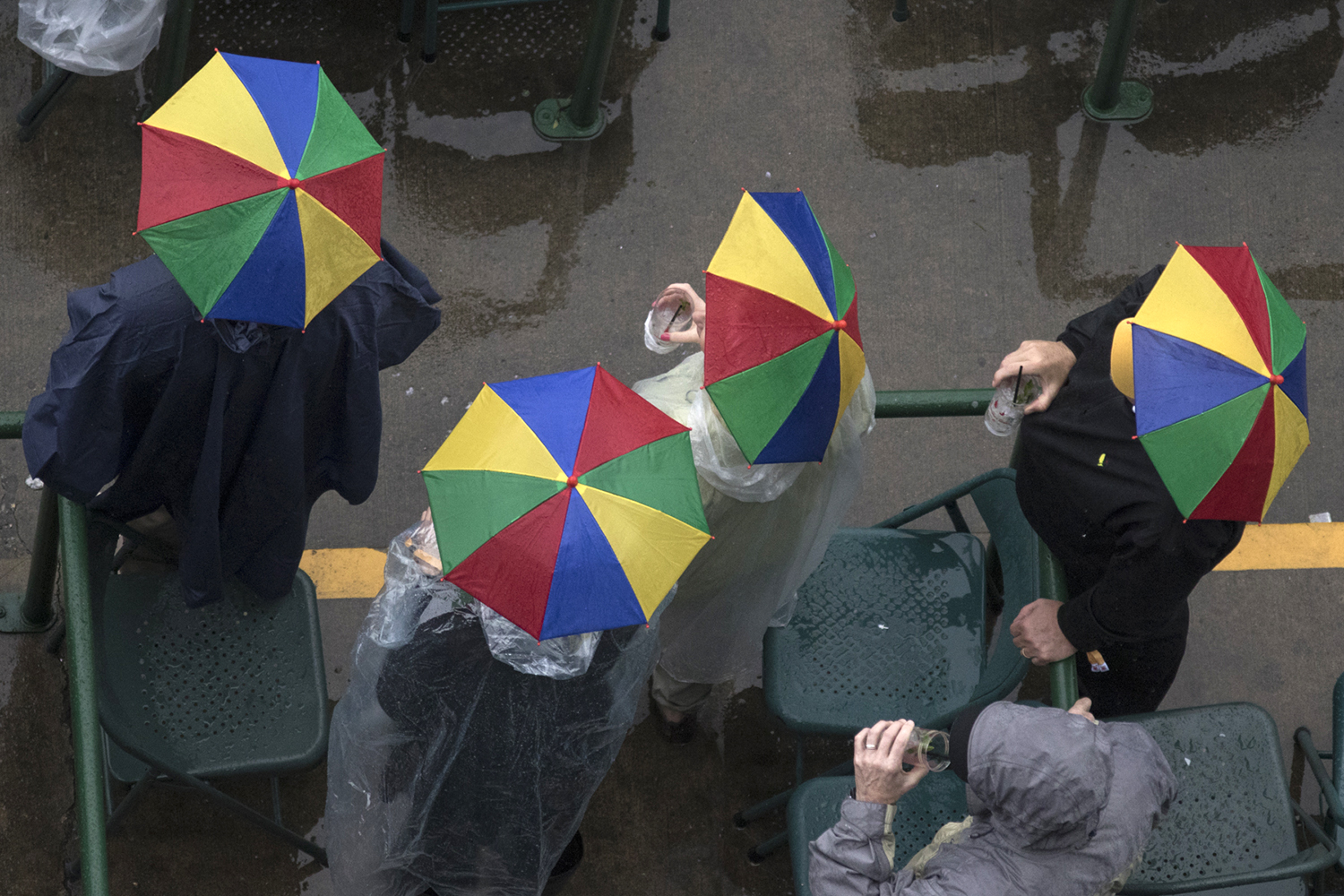
Wagering on the Kentucky Derby and the 14-race Derby day card at Churchill Downs in Louisville on a rain-soaked Saturday broke records for the second year in a row, according to charts of the race, demonstrating the continuing strength of big race days in the U.S. racing industry.
The dual records were set despite the rainiest Derby day on record, part of a wide swath of wet weather stretching from Texas to the Northeastern seaboard. The jumps in handle also came in the midst of relatively recent positive wagering trends throughout much of the U.S. racing industry, a phenomenon that has arisen in the wake of beneficial tax changes on pari-mutuel winnings that were enacted in the fall of last year.
Handle on the Derby itself, including horizontal wagers ending in the race, was $148.0 million, an increase of 7.5 percent over last year’s record. For the entire 14-race card, total handle was $223.7 million, a 7.8 percent increase over Derby day wagering last year, which was the first time that any North American race card had broken the $200 million mark.
The weather that made for soggy conditions at Churchill on Saturday may have actually had a beneficial effect in other parts of the country as horseplayers throughout the weather system stayed glued to their in-home account-wagering services during the long Churchill card instead of enjoying the outdoors for part of the day. While several of those account-wagering services had sporadic outages in the hour leading up to the Derby, including Churchill’s own twinspires.com, the services eventually were up and running with approximately 20 minutes to post of the race.
Despite the wet weather and what appeared to be a relatively sparse crowd in the infield, Churchill reported attendance of 157,813 for this year’s Derby, the eighth-largest crowd in the history of the race.
With the exception of the pick three, wagering in every pool offered for the Derby was up compared to the 2017 running, according to charts, reflecting, perhaps, the depth of the field. Straight wagers attracted $62.3 million in bets, up 7.2 percent, and exacta betting was up 5.3 percent to $24.5 million, with trifecta betting up 6.7 percent, to $32.8 million. The superfecta pool was only a shade higher than the super pool last year.
The pick five ending in the Derby had handle this year of $2.9 million, up 69 percent over last year, while the pick five ending in the seventh race had handle of $759,680, up 29 percent. Prior to the spring meet, Churchill lowered the takeout for its pick five wager from 22 percent to 15 percent. The reduction did not appear to have a negative impact on other horizontal wagers, as the pick six pool was up 16.9 percent and the pick four pool was up 18.3 percent. The pick three pool was 2.5 percent lower.
Churchill lowered the takeout rate on the pick five this year four years after raising its takeout rates across the board to the maximum allowed by state law, a decision that drew widespread criticism from horseplayers and led to calls to boycott the track, a movement that gained steam after the Derby was run that year. Still, despite the takeout increases that remain in place, total wagering on Derby day has risen 23.8 percent since the takeout hikes were implemented.
Racing officials credit some of the recent growth in overall wagering on U.S. races to the impact of last fall’s tax changes, which have been highly beneficial to players who bet in the exotic pools by sharply reducing the number of winning wagers subject to automatic reporting and withholding. In the first quarter of this year, handle on U.S. races was up 6.2 percent despite a 3.4 percent drop in the number of races held, for a 10 percent increase in per-race handle.
