

Beyer: Horse racing thrives in Turkey, but it's a tough bet
ISTANBUL — During a period when the world’s Thoroughbred business has suffered, and betting totals in the United States have dropped year by year, there is at least one nation where racing has prospered: Turkey.
Its success may be unrecognized even by industry insiders; despite the globalization of the sport, horse racing in Turkey is little known. Its horses rarely venture outside their own borders, and outsiders seldom come in. But last year Turks wagered the U.S. dollar equivalent of $1.49 billion on their races — a 21 percent jump from 2010.
The statistics in Turkey contradict many people’s notions about the right way to make horse racing grow. Most fans believe that a low takeout rate — the percentage of a wager that is kept by the track and the state — will give players a fair chance to win and thus will stimulate betting. Yet Turkey’s takeout rate of 50 percent is among the most oppressive in the world. And while many people in the industry believe that too much government meddling is the bane of the sport, the central government controls almost every aspect of Turkish racing.
Horse racing has a long history here, but it began to take its modern shape in the 1920s — just as the entire nation did — after Kemal Ataturk, the first president of the Turkish Republic, set out to transform almost every aspect of a backward country. He turned Turkey into a secular society; he obtained full political rights for women; he imposed a new alphabet and a new calendar; he mandated that every Turk adopt a surname; he told the male population to wear hats instead of a fezzes. And he made a memorable declaration that is still quoted at racetracks like gospel: “Horse racing is a social need for modern societies.”
The government organized horse racing, and in the early 1950s, after Ataturk’s death, put the sport in the hands of specialists by creating the nonprofit Jockey Club of Turkey, overseen by the Ministry of Agriculture. Today the Jockey Club is responsible for the country’s eight racetracks, its on-line betting system, its 2,700 off-track betting shops, and seven stud farms. It buys and imports most of the prominent stallions in the country, including many familiar to Americans: two Kentucky Derby winners, Sea Hero and Strike the Gold (who died in December), Belmont Stakes winner Victory Gallop and Haskell Invitation winner Lion Heart, whose purchase caused some controversy. Burak Konak, corporate relations coordinator for the Jockey Club, said a committee’s decision to buy Lion Heart spilled out into the political arena. “There was a huge debate in Turkey about buying a single-testicled horse,” Konak said. “They were even talking about it in Parliament.”
Private horse owners — who come from all levels of society, not just the elite — pay stud fees to breed to these stallions and they obtain a fair chance to make a profit. It’s cheap to keep a horse in training here, and the everyday purses are respectable. The tracks offer races for Arabian horses as well as Thoroughbreds, and because the slower Arabians are sturdier and run more often, they can be even more profitable. The International Federation of Horseracing Authorities calculated in 2009 that the earnings of the average horse in Turkey exceeded the cost of his upkeep by 18 percent. Owning racehorses is a winning investment.
But betting on them isn’t.
The Jockey Club receives a 22 percent cut from all wagers in order to fund purses and pay for its operations — slightly higher than the takeout rate in the United States. But in addition to that slice, the government takes a 28 percent tax off the top of every wager — creating an insurmountable 50 percent total takeout. “People are used to it,” Konuk said. Horseplayers adjust their betting accordingly; more than half of all the money wagered in Turkey goes onto the Pick Six, which has a wagering unit of about 27 cents. The more sophisticated players probably understand that their only chance of winning is to make a big score, but the less sophisticated surely don’t understand the implications of a 50 percent takeout.
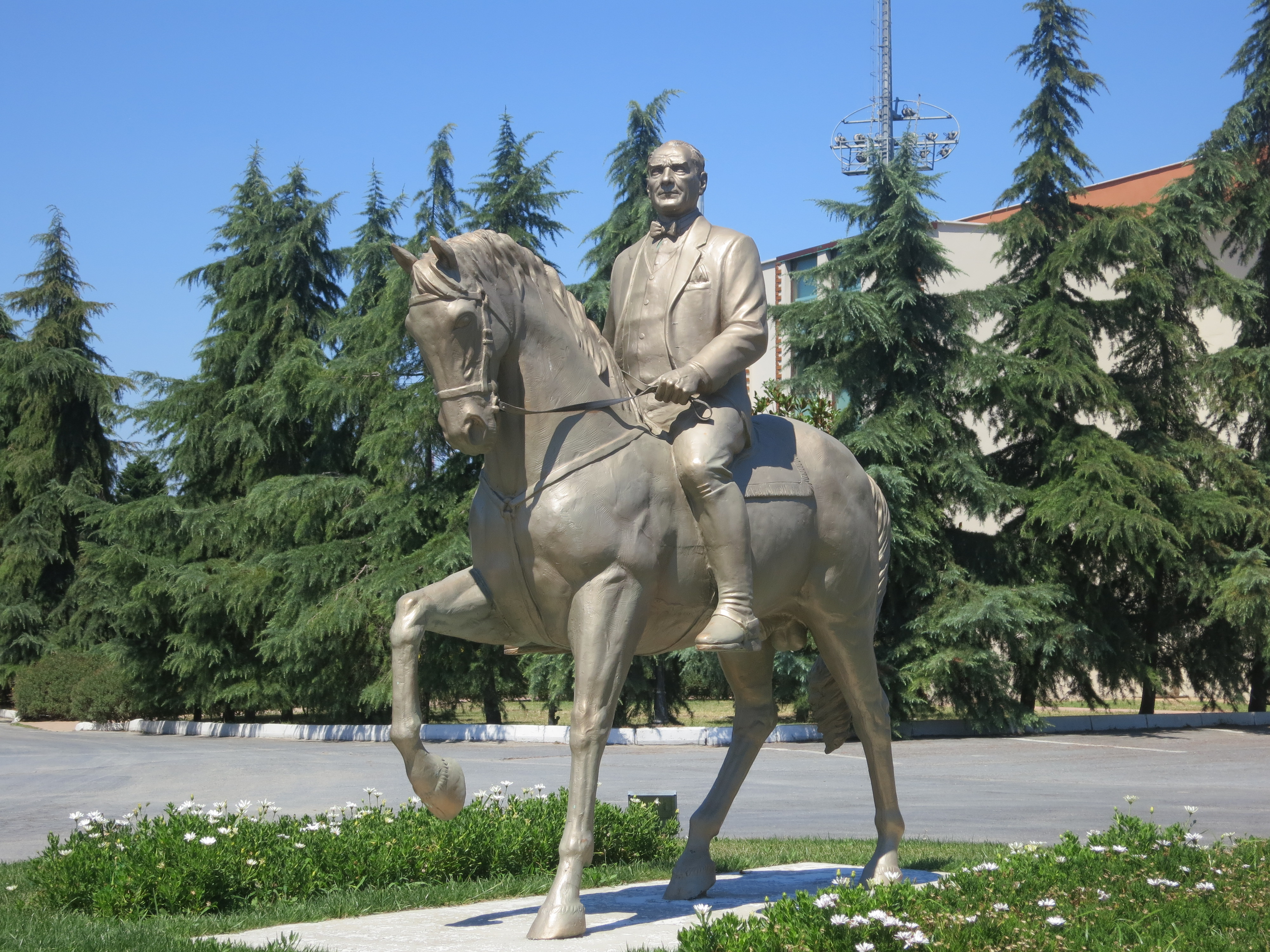
When I visited Veliefendi racecourse in Istanbul on Sunday, I enjoyed most aspects of the racing. Situated on the edge of the Marmara Sea, it has a grand-looking 1 1/4-mile turf course surrounding a Polytrack oval on which the majority of the races are contested. The grandstand is modern and comfortable, though many of the fans prefer to congregate in a large, tree-covered picnic area that evokes the atmosphere of Saratoga. I love the way Veliefendi pays homage to the sport’s history. An imposing statue of Ataturk on horseback graces the grounds. The VIP room is named after the Byerly Turk, the 17th-century horse who is one of the three progenitors of the entire Thoroughbred species.
But as I watched horseplayers in the grandstand poring over their form sheets in the manner of horseplayers everywhere, I couldn’t repress the thought that they were playing a sucker’s game. The government has organized the sport so that it can collect the maximum revenue for itself while giving fans no realistic chance to win. It’s hardly a model that the rest of the racing world should want to emulate.
(c) 2012, The Washington Post